

Blog

2026 Top Compound PP Types for Global Buyers?

Global buyers entering the 2026 polypropylene market need more than a simple product ranking. They need material choices linked to application demands, processing equipment, compliance expectations, and supply reliability. This is where compound pp becomes strategically important. It can improve stiffness, impact strength, dimensional stability, appearance, or heat resistance through carefully selected fillers and additives.

Common options include talc-filled compound pp for automotive interiors, mineral-filled grades for rigid household products, and glass-fiber-reinforced grades for demanding structural parts. Impact-modified types may suit cold environments, while flame-retardant grades require careful documentation and application-specific testing. Each formulation creates trade-offs. Higher stiffness can reduce impact performance. More filler can lower cost, but may affect surface quality and weld-line strength.

Polymer industry author and consultant Mike Tolinski has emphasized a practical principle: “Material choices must serve the application, not merely the datasheet.” That principle remains useful for global purchasing teams. A supplier’s technical data sheet is only a starting point. Buyers should request batch consistency records, processing guidance, test methods, regulatory declarations, and relevant production samples.

The “best” compound pp type is not universal. It depends on geometry, cycle time, service temperature, color, recycling goals, and regional requirements. Sometimes, a lower-performance grade is the wiser choice. That may sound imperfect, but over-engineering can increase cost and waste. A reliable 2026 sourcing strategy should compare measurable performance with total supply risk, not chase impressive specifications alone.
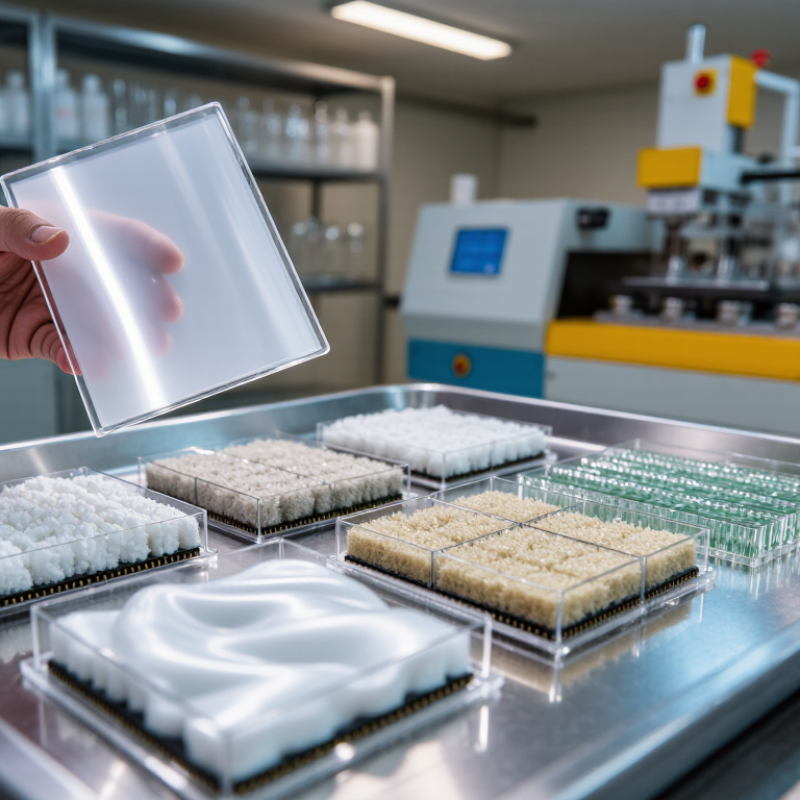
2026 Top Compound PP Types for Global Buyers?

What Compound PP Is and Why It Matters in 2026

Compound PP is polypropylene modified with fillers, fibers, impact agents, stabilizers, or colorants. Its final performance depends on the formulation, not only the base resin.

In 2026, buyers should connect each compound PP type with its working environment. Glass-fiber reinforced PP can improve stiffness for housings and structural parts. Mineral-filled PP may reduce shrinkage and control cost. Impact-modified PP helps parts survive drops, vibration, and cold handling. Flame-retardant grades support demanding electrical applications, but they require careful testing and compliance checks.

Material selection starts with real production conditions. Check melt flow, drying needs, molding temperature, weld-line strength, and expected service temperature. A smooth sample may look excellent, yet fail after repeated loading. Ask for lot records, test methods, and aging data. Recycled-content compounds can support sustainability targets, but their color, odor, and batch consistency may vary. That detail is easy to underestimate.

There is no universal best type. A stiffer formulation can become more brittle. Higher filler content may improve dimensional stability while reducing impact resistance. Even a reliable specification can need revision after tooling trials. Small changes in wall thickness, gate design, or cooling time can alter the result. Careful sampling remains essential for global buyers.

Key Compound PP Types Available to Global Buyers

For global buyers in 2026, compound polypropylene (PP) is not one universal material.

Key available types include homopolymer PP, impact copolymer PP, random copolymer PP, mineral-filled PP, glass-fiber-reinforced PP, and flame-retardant grades.

Homopolymer PP offers stiffness and chemical resistance for containers, caps, and rigid molded parts.

Impact copolymer PP handles cold drops better, supporting crates, appliance housings, and transport components.

Random copolymer PP provides improved flexibility and a clearer appearance.

Small details matter.

Mineral-filled grades can reduce shrinkage and improve dimensional stability, but they may increase brittleness. Glass-fiber compounds deliver higher strength, although mold design and fiber orientation require careful control.

Flame-retardant PP needs documented testing, not a casual claim on a datasheet.

Buyers should compare

  • Melt flow rate
  • Tensile strength
  • Impact performance
  • Density
  • Color stability
  • Odor
  • Processing temperature

Ask for lot traceability, test methods, regulatory declarations, and production-batch samples. A sample can mislead. Processing equipment changes results.

Recycled-content compounds may support sustainability targets, yet consistency can vary between lots.

Define acceptable limits before signing a supply agreement.

Not every low-cost compound is good value; tooling changes, scrap, and retesting can quietly raise total cost. A careful trial still earns its place.

How Reinforcement and Additives Change PP Performance

2026 Top Compound PP Types for Global Buyers?
How Reinforcement and Additives Change PP Performance

Compound polypropylene is no longer a simple cost-saving material. Reinforcement changes stiffness, impact strength, shrinkage, and dimensional stability. Glass fiber can improve rigidity, while mineral fillers often reduce warpage and material cost. Talc-filled PP suits rigid housings and interior parts. Impact modifiers help products survive drops and cold handling. PlasticsEurope reported global plastics production of 413.8 million tonnes in 2023. This scale makes compound selection a technical decision, not merely a purchasing decision.

Additives also shape processing behavior. Nucleating agents can shorten cooling cycles and improve crystallization. Heat stabilizers protect performance during repeated thermal exposure. UV stabilizers matter for outdoor applications. However, higher filler loading is not automatically better. Practical trials often reveal weaker weld lines, higher abrasion, or difficult surface finishing. The OECD projects plastic waste could nearly triple by 2060 without stronger intervention. Therefore, buyers should examine recycled-content compatibility, long-term aging, and end-use separation requirements. ISO 527 tensile testing and ISO 178 flexural testing provide useful comparison points, but laboratory results cannot replace production trials.

Tips: Request the full formulation range, not only the headline grade. Confirm filler percentage, moisture limits, color tolerance, and lot-to-lot variation. Test molded parts at real wall thicknesses. A compound that performs well on a datasheet may disappoint in a thin, complex component. Pay attention to that gap.

2026 Top Compound PP Types for Global Buyers? - How Reinforcement and Additives Change PP Performance

Typical performance ranges for commercially available polypropylene compounds; final values depend on grade design, test method, processing, moisture conditioning and specimen geometry.

Compound PP Type Main Reinforcement or Additive Typical Loading Density
(g/cm³)
Tensile Strength
(MPa)
Flexural Modulus
(MPa)
Notched Izod Impact
(kJ/m²)
HDT at 0.45 MPa
(°C)
Dimensional Shrinkage Primary Performance Benefit Typical Applications Main Buyer Considerations
Unfilled PP Homopolymer None; nucleating agent may be used 0–1% 0.90–0.91 25–35 1,000–1,600 2–5 85–105 Medium to high Low density, good chemical resistance, balanced stiffness and processability Household parts, caps, packaging components, general injection molding Best for cost and weight efficiency; limited heat resistance and low-temperature impact performance
Impact Copolymer PP Ethylene-propylene rubber phase 5–20% rubber phase 0.90–0.91 18–30 700–1,300 10–30 75–100 Medium to high Improved impact strength, especially at low temperatures Automotive trim, crates, appliances, durable packaging and containers Higher impact usually reduces stiffness, tensile strength and heat-deflection performance
Talc-Filled PP Micronized talc 10–40% 0.98–1.18 25–38 2,200–4,500 2–6 105–125 Low to medium Higher stiffness, better dimensional stability and reduced molding shrinkage Instrument panels, appliance housings, interior automotive parts and structural covers Particle size and surface treatment strongly affect warpage, weld-line strength and surface finish
Calcium Carbonate-Filled PP Calcium carbonate mineral filler 10–40% 1.00–1.25 22–35 1,800–3,800 2–7 95–120 Low to medium Lower material cost, increased stiffness and improved dimensional control Packaging, household products, storage systems and non-structural molded parts Check filler dispersion, ash content, surface appearance and impact retention at low temperature
Short Glass-Fiber PP Chopped glass fiber 15–40% 1.03–1.20 55–105 3,500–8,000 4–10 125–155 Very low in the flow direction High stiffness, strength and heat resistance Automotive brackets, fan components, pump parts, power-tool housings and industrial components Fiber orientation creates anisotropy; abrasion, weld-line strength and mold wear require attention
Long Glass-Fiber PP Long glass-fiber pellets or tailored long-fiber technology 20–40% 1.10–1.28 80–150 6,000–12,000 7–18 145–170 Very low; strongly process-dependent High structural performance, improved creep resistance and better retained impact strength Load-bearing automotive modules, structural brackets, seat components and industrial housings Requires controlled molding conditions, suitable screw design and careful fiber-length retention
Mineral-Reinforced Low-Warp PP Balanced mineral package, often with nucleating and compatibilizing additives 20–40% 1.05–1.25 25–40 2,500–5,000 2–7 110–135 Low and more isotropic Reduced warpage and improved surface consistency for large molded parts Large automotive panels, appliance parts, furniture components and housings Evaluate coefficient of thermal expansion, mold-flow balance, gloss and paint adhesion
Flame-Retardant PP Halogenated or halogen-free flame-retardant system; may include synergists Formulation-dependent, commonly 10–30% 1.05–1.40 20–35 1,500–3,500 2–8 80–115 Medium Improved resistance to ignition and flame propagation when properly formulated Electrical housings, power components, appliances and transport interiors Always verify the exact flammability rating, glow-wire result, smoke behavior and regulatory compliance
UV-Stabilized PP Hindered amine light stabilizers, UV absorbers and antioxidants 0.2–2.0% 0.90–0.92 24–35 950–1,600 3–8 85–105 Medium to high Improved resistance to outdoor discoloration, embrittlement and surface degradation Outdoor furniture, agricultural components, automotive exterior parts and storage products Weathering life depends on pigment, thickness, climate, exposure orientation and stabilizer compatibility
Nucleated and Clarified PP Nucleating or clarifying additives 0.05–0.5% 0.90–0.91 28–38 1,200–1,900 2–6 90–110 Medium Faster crystallization, improved stiffness, cycle time and optical clarity in suitable grades Thin-wall packaging, housewares, transparent containers and medical components Processing window, haze, color, sterilization method and additive migration must be checked
Mineral-Filled Impact PP Mineral filler combined with an elastomeric impact modifier 10–30% mineral plus impact modifier 0.98–1.15 22–34 1,700–3,200 6–18 95–120 Low to medium Balanced stiffness, dimensional stability and impact performance Automotive interior parts, bins, cases, protective covers and durable consumer products Useful for balancing conflicting requirements, but formulation cost and density are higher than standard PP
PP with Slip, Antistatic or Processing Additives Erucamide or oleamide slip agents, antistatic agents, processing aids and antioxidants 0.1–3.0% 0.90–0.92 24–35 950–1,600 2–7 85–105 Medium to high Improved film release, surface handling, static control or processing stability Films, packaging, electronic components, medical packaging and high-speed molded parts Confirm coefficient of friction, additive blooming, sealability, migration and downstream printing behavior

Technical note: Values are indicative ranges compiled from common PP compound formulation practices and standard test conditions. They are not material specifications. Buyers should request the supplier’s current datasheet, test method, color-specific data, lot-to-lot tolerance, regulatory documentation and processing recommendations before qualification.

Where Each Compound PP Type Fits Best by Application

For global buyers, compound PP should match the application, not merely the lowest resin price. Impact copolymer PP suits bumpers, crates, and appliance housings because it tolerates cold knocks. Talc-filled PP adds stiffness for instrument panels, housings, and structural trim. Glass-filled PP offers higher strength, but it can increase warpage and tool wear. According to Mordor Intelligence’s 2024 market analysis, automotive applications remain a major demand center for polypropylene compounds, driven by lightweighting and part consolidation.

Mineral-filled PP fits rigid packaging and household products where dimensional stability matters. Flame-retardant PP is more suitable for selected electrical enclosures, provided testing meets the target market’s safety requirements. Recycled-content compounds can support lower-impact procurement, yet buyers should verify odor, color variation, contamination controls, and batch consistency. PlasticsEurope’s Plastics—the Fast Facts 2024 reports that mechanical recycling remains a smaller route than primary plastics production in Europe. That gap deserves honest attention. Recycled content is useful, but it is not automatically a technical upgrade.

Tips: Request a full datasheet, not only tensile strength. Check impact performance at service temperature, shrinkage, weld-line strength, and melt flow. Run a trial using the actual mold and wall thickness. In practice, a high-stiffness grade may fail at a sharp corner. This is easy to overlook. Compare three suppliers, record processing settings, and confirm regional compliance documents before purchase. Industry reports guide selection, but application testing decides whether the compound truly fits.

2026 Top Compound PP Types for Global Buyers

Where each compound polypropylene type fits best by application

The index represents typical application fit on a 0–10 scale, based on the balance of stiffness, impact resistance, dimensional stability, heat performance, weight, and processability commonly associated with each PP compound type. It is comparative technical guidance, not market-share data.

How Global Buyers Can Compare and Select Compound PP Grades

Global buyers should compare compound PP grades by application, not by filler percentage alone. Talc-filled PP offers stiffness and dimensional stability for dashboards, housings, and appliance parts. Glass-fiber PP delivers higher strength, but it can increase warpage and tool wear. Mineral-filled and impact-modified grades suit parts needing balanced rigidity and toughness.

PlasticsEurope reported 413.8 million tonnes of global plastics production in 2023. That scale increases pressure to document material performance and recycled content. ISO 19069 testing can help buyers compare tensile strength, flexural modulus, impact resistance, and shrinkage. Yet, laboratory results may not predict every molding line. Moisture, residence time, and gate design still matter.

I have seen a “stronger” grade fail after thin-wall processing. That detail is easy to miss.

Tips: Request the full technical data sheet, test method, filler level, and lot-to-lot tolerance. Ask for molded plaques using your actual wall thickness. Check color stability after heat aging. For recycled-content grades, verify melt-flow consistency and odor requirements. A useful comparison matrix should include cost per finished part, not only price per kilogram. Do not ignore processing temperature. Small differences can change cycle time and reject rates.

Register now