


Blog
What Is the Best China Paper Cup Board for Global Buyers?
Choosing the best Paper Cup Board for global buyers is not simply a price comparison. It is a decision about safety, performance, consistency, and responsibility. The right board must run smoothly on high-speed forming machines. It should also resist liquid penetration without creating unnecessary production problems. Cup stiffness matters. So do coating quality, folding behavior, printability, and reliable delivery.
Packaging specialist Dr. Martin S. Huber explains, “A paper cup board succeeds when its material performance matches the entire converting process, not just the laboratory test.” This point deserves attention. A board may show excellent moisture resistance in testing, yet curl during printing or crack at the crease. That difference can create waste, delays, and customer complaints. Real factory experience matters.
Global buyers should examine fiber origin, food-contact documentation, coating technology, basis weight, moisture tolerance, and supplier traceability. They should request recent technical data, sample rolls, and production references. Regional climate can also affect storage and converting results. A board stored in a humid warehouse may behave differently from one tested in a controlled laboratory.
There is no universal winner. Some buyers prioritize premium print appearance. Others need dependable performance at a competitive cost. Compostable or recyclable claims also require careful verification, because disposal systems differ across markets. Even experienced buyers can overlook small details. A stronger evaluation process remains necessary. This guide compares the key specifications, supplier capabilities, and practical risks behind the best Paper Cup Board choices for international purchasing.
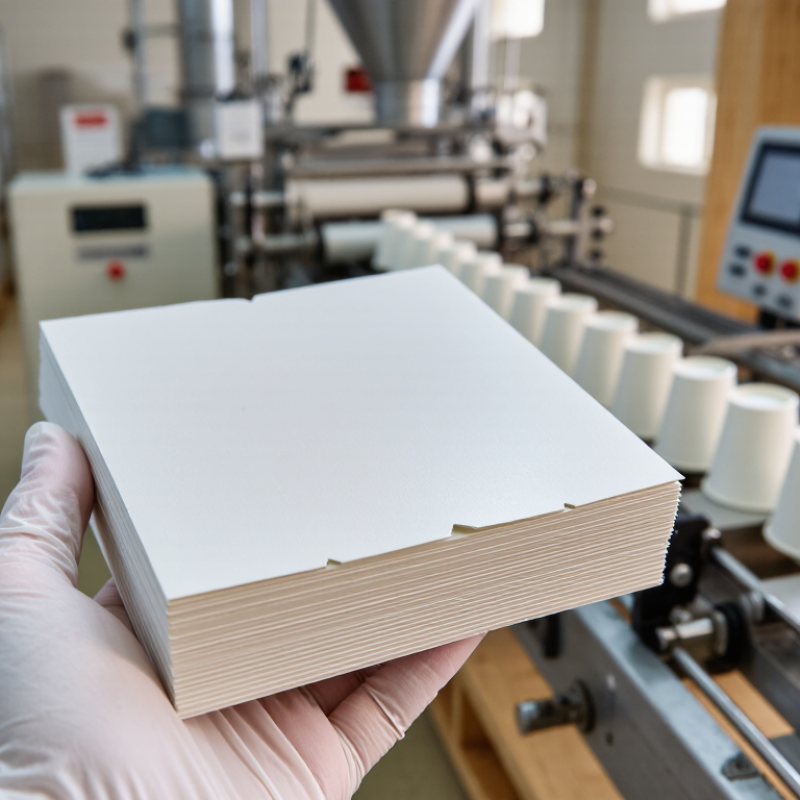
Paper Cup Board Basics: 180–350 gsm, Food-Grade Fibers, and PE Coatings
What Is the Best China Paper Cup Board for Global Buyers?
Paper cup board usually ranges from 180 to 350 gsm. Lower weights suit small cold cups and reduce material use. Higher weights provide better stiffness for large drinks, hot fillings, and longer handling. A heavier board is not automatically better. It can increase costs and complicate forming if the cup machine is poorly adjusted.
Food-grade fibers are the foundation. Buyers should request fiber origin details, production records, and current food-contact test reports. Consistent moisture matters too. Excess moisture may cause curling, while low moisture can make creasing brittle. In practical sourcing, a sample roll often reveals more than a technical sheet. Inspect the cut edge, surface smoothness, odor, and print behavior. Some specifications still need correction after testing.
Tips: Match 180–250 gsm with smaller cups, and consider 250–350 gsm for larger or hotter applications. Check whether the PE coating is single-sided or double-sided. Ask about coating weight, sealing temperature, pinholes, and liquid resistance. Confirm roll width and tolerance before ordering. Small details matter.
PE creates a practical moisture barrier, but it does not fix weak board structure. The coating must bond evenly and seal around the cup seam.
Global buyers should compare samples under real filling conditions, including hot water, cold beverages, and storage time. Laboratory results are useful, but factory trials may expose problems earlier. I would not approve a large shipment from paperwork alone.
China’s Cupstock Grades: Virgin Fiber, Recycled Content, and 10–20 gsm PE
For global buyers, the best China paper cup board depends on use, not appearance. Virgin fiber board offers clean taste, stable stiffness, and smooth forming on high-speed cup lines. It suits hot drinks, cold beverages, and demanding food-contact applications. Recycled-content board can reduce material impact, but quality may vary between batches. Odor, cleanliness, fiber strength, and regulatory documentation need careful review.
PE coating usually ranges from 10 to 20 gsm. A lighter coating can support easier recycling discussions and lower material use. However, it may provide less resistance against hot liquid, condensation, or extended holding time. Heavier PE improves sealing and leak protection, but it can affect converting and end-of-life handling. Buyers should confirm whether the quoted coating weight applies to one side or both sides. That detail is often missed. It should not be.
Tips: Request samples in the intended basis weight and test them on your actual cup machine. Check heat-seal strength, curl, odor, Cobb value, and print surface. Ask for fiber composition, coating weight tolerance, food-contact declarations, and batch inspection records. A bright sample proves very little. Short production trials reveal more. Recycled grades may perform well, but assuming identical behavior to virgin fiber is a costly mistake.
Performance Standards: 90–100°C Heat Resistance and Cobb60 Below 30 g/m²
What Is the Best China Paper Cup Board for Global Buyers?
Performance Standards: 90–100°C Heat Resistance and Cobb60 Below 30 g/m²
For global buyers, cup board quality begins with measurable performance, not attractive samples. A reliable grade should tolerate beverages at 90–100°C without softening, leaking, or excessive rim deformation. This range suits hot coffee, tea, and similar drinks. However, heat resistance depends on more than the paper base. Coating uniformity, sealing temperature, and forming pressure also affect the finished cup. In production trials, I check filled cups after five, thirty, and sixty minutes. Small leaks often appear late. That detail is easy to miss.
Cobb60 should remain below 30 g/m² for dependable liquid resistance. A lower value usually indicates a tighter, better-protected surface, but it does not guarantee perfect converting. Paper stiffness, moisture balance, and coating adhesion still matter. Buyers should request recent test data, production samples, and roll-condition records. Independent laboratory verification adds confidence. It also exposes inconsistent batches. No supplier should rely only on a single certificate or an old test report. Specifications can look correct while actual cup performance varies.
Tips: Test the board with your own cup design and sealing equipment. Use water at 90–100°C, then inspect seams, sidewalls, and rims. Measure Cobb60 under a recognized method, preferably through an independent laboratory. Check storage history, because humidity can change forming behavior. I would also test a second batch. One successful trial may simply be luck.
Global Buyer Checks: FDA, EU 1935/2004, BfR, FSC, and ISO 22000 Compliance
What Is the Best China Paper Cup Board for Global Buyers?
For global buyers, the best China paper cup board is not simply the whitest or stiffest sheet. It must support safe food contact, stable forming, and traceable production. Request the FDA food-contact basis for the intended application. Check whether testing covers the coating, inks, adhesives, and temperature conditions. A general FDA statement may not cover every cup design.
EU 1935/2004 requires materials to avoid transferring harmful substances or changing food quality. Ask for a Declaration of Compliance and recent migration test reports. BfR recommendations are also useful, especially for paper fibers, coatings, and additives. They are not a replacement for the applicable EU rules. FSC certification helps verify responsible fiber sourcing, but confirm the chain-of-custody scope on the certificate. That detail matters.
ISO 22000 shows that a supplier manages food-safety risks through documented controls. It does not automatically prove that every board batch is compliant. Check lot numbers, production dates, moisture results, and storage conditions. Request samples from normal production, not only selected sheets. I would not approve a mill on certificates alone. Documents can expire. Testing can miss a changed coating. Small gaps remain. An experienced buyer should compare records with the physical board, including curl, odor, print adhesion, and sealing performance. Local market rules may also differ, so technical review should happen before shipment.
What Is the Best China Paper Cup Board for Global Buyers? - Global Buyer Checks: FDA, EU 1935/2004, BfR, FSC, and ISO 22000 Compliance
| Buyer Evaluation Dimension | Relevant Requirement | What the Paper Cup Board Should Demonstrate | Recommended Evidence to Request | Buyer Status |
|---|---|---|---|---|
| United States food-contact compliance | Applicable FDA requirements may include 21 CFR 176.170 and 21 CFR 176.180, depending on the paper, coating, additives, food type, and conditions of use. | The complete cup structure, including paperboard, coating, inks, adhesives, and processing aids, must be suitable for the intended food-contact application. | FDA compliance statement, composition declaration, coating and ink information, migration or extraction test reports, and intended-use conditions. | Verify by application |
| European Union food-contact framework | Regulation (EC) No 1935/2004 requires food-contact materials not to transfer constituents in quantities that endanger health, change food composition, or adversely affect taste or odour. | Traceable raw materials and a documented assessment for the finished cup, including coating, printing, adhesives, and foreseeable use conditions. | Declaration of compliance or equivalent technical declaration, migration testing where applicable, traceability records, and supporting material specifications. | Verify by application |
| German market expectations | BfR Recommendation XXXVI is a widely referenced German evaluation basis for paper and board intended for food contact; it is not a substitute for a complete legal compliance assessment. | Paper, board, coatings, and additives should be evaluated against the relevant BfR recommendations and the actual food-contact conditions. | BfR-oriented test report, raw-material list, restricted-substance statement, and finished-product migration or sensory test data when relevant. | Market-specific review |
| Responsible forestry claim | FSC certification concerns responsible forest management and chain of custody. It is not a food-contact safety certification. | The claimed FSC material percentage and product claim must be supported by a valid chain-of-custody system covering the relevant supply chain. | Valid certificate number, certificate scope, product-group coverage, transaction or delivery documents, and approved claim wording. | Separate sustainability check |
| Food-safety management system | ISO 22000 specifies requirements for a food-safety management system operated by an organization; it does not certify that a particular paperboard grade is automatically compliant. | The manufacturing site should control hazards, suppliers, hygiene, traceability, corrective actions, and documented food-safety procedures relevant to paperboard production. | Current ISO 22000 certificate, certification scope, issuing body, validity dates, audit status, and site address matching the production location. | Site certification check |
| Board construction | Single-side or double-side coated paperboard may be used according to cup design, filling temperature, shelf life, and printing requirements. | The selected board should provide sufficient stiffness, foldability, printability, and barrier compatibility for the intended cup-forming process. | Technical data sheet, coating-side specification, bending or stiffness data, folding trial, and cup-forming trial sample. | Application dependent |
| Typical grammage selection | Commercial cup-stock grades commonly fall within approximately 170–350 g/m², but the correct value depends on cup size, geometry, coating, and forming equipment. | A practical starting range is often 190–230 g/m² for smaller or medium cups and approximately 230–320 g/m² for larger or more rigid cups, subject to validation. | Declared grammage tolerance, thickness, moisture range, stiffness data, and production-trial results. | Confirm by cup design |
| Barrier system | PE, water-based dispersion, or bio-based polymer coatings can be used, but each system requires separate suitability, sealing, recycling, and migration evaluation. | The coating should provide the required liquid barrier and heat-sealing performance without compromising food-contact compliance or cup forming. | Coating weight, sealing-temperature window, Cobb or liquid-resistance data where applicable, migration reports, and recyclability documentation. | Test finished structure |
| Printing and converting safety | Inks, varnishes, adhesives, and production chemicals can affect the compliance of the finished cup even when the base board is suitable. | The print side, reverse side, set-off risk, adhesive system, and curing process should be controlled for the intended food-contact use. | Supplier declarations, low-migration ink information where applicable, set-off controls, process specifications, and finished-cup sensory testing. | Check the complete cup |
| Quality consistency | Consistent moisture, caliper, grammage, coating coverage, curl, and reel or sheet quality are essential for high-speed cup production. | The board should run consistently on the buyer’s printing and cup-forming equipment with controlled variation between batches. | Certificate of analysis for each batch, agreed inspection limits, retained samples, pallet labels, and a documented complaint or corrective-action process. | Validate by trial order |
| Best overall purchasing choice | There is no single universally best grade. The best choice is the board that matches the target market, food type, temperature, filling method, cup design, and converting equipment. | Prioritize documented compliance, stable technical performance, traceability, reliable supply, and successful finished-cup trials over grammage or price alone. | Complete technical dossier, current certificates, batch test reports, pilot-production approval, and a written specification agreed by both parties. | Approved after validation |
Supplier Selection: MOQ, Lead Time, 1,000–10,000-Cup Sampling, and Total Cost
What Is the Best China Paper Cup Board for Global Buyers?
Supplier selection should begin with usable specifications, not the lowest quoted price. A typical food-grade cup board may use 180–350 gsm paper, depending on cup size, coating, and forming equipment. ISO 536 defines grammage measurement, while ISO 535 covers Cobb water absorption. These standards help buyers compare samples fairly.
MOQ often changes the real purchase cost. A low MOQ may carry higher conversion costs, while a large MOQ can create storage and cash-flow pressure. For sampling, 1,000 cups usually require about 8–15 kg of board. A 10,000-cup trial may need 80–150 kg, including setup waste and trimming. These figures are planning ranges, not promises. Actual usage depends on cup diameter and nesting efficiency.
Lead time should include production, coating, inspection, and export preparation. Seven to fifteen working days may suit stocked base board, but custom coating often takes longer. Smithers’ paper packaging research highlights continued demand for fiber-based food packaging, yet sustainability claims still require evidence. Ask for food-contact documentation, coating details, grammage reports, and recent test results. CEPI reported a European paper recycling rate above 80%, but recyclability can vary with coatings and local systems. Total cost should include board, freight, testing, rejected sheets, and inventory. I would still challenge one assumption: the cheapest sample is rarely the cheapest scalable option.