



Blog

How to Choose the Best Compound Packaging for Your Products

Choosing the right packaging for your products is a critical decision that affects not only the safety and integrity of the items but also the overall customer experience. Among the various options available, compound packaging has emerged as a popular choice due to its versatility and potential for enhancing product presentation. This type of packaging combines materials to leverage the strengths of each, providing exceptional protection and aesthetic appeal.

In this guide, we will explore the key factors to consider when selecting the best compound packaging for your products. From evaluating the materials used to understanding the environmental implications, each consideration plays a vital role in ensuring that your packaging aligns with your brand’s values and meets consumer expectations. We will also discuss how proper compound packaging can significantly impact logistics and reduce costs, making it an indispensable component in the modern marketplace. By the end, you will be equipped with the knowledge needed to make informed decisions for effective product packaging.

How to Choose the Best Compound Packaging for Your Products

Understanding the Importance of Compound Packaging in Product Safety

Compound packaging plays a crucial role in ensuring product safety, as it serves multiple functions that protect both the product and the consumer. First and foremost, it acts as a barrier against environmental factors such as moisture, oxygen, and light. These elements can compromise the integrity and effectiveness of many products, particularly perishable goods and pharmaceuticals. Thus, high-quality compound packaging is essential to maintain the freshness and potency of these items throughout their shelf life.

Moreover, compound packaging is designed to withstand various physical stresses during transportation and handling, reducing the risk of damage. This protection not only enhances the consumer's experience by ensuring they receive a product in optimal condition but also strengthens the brand's reputation for quality and reliability. Additionally, safety features such as tamper-evident seals and child-resistant closures are increasingly vital, especially for products that could pose health risks if improperly accessed. By prioritizing the selection of appropriate compound packaging, businesses can significantly contribute to product safety and consumer trust.
Factors to Consider When Selecting Compound Packaging Materials

When selecting compound packaging materials, several critical factors must be carefully considered to ensure the optimal protection and presentation of your products. One of the most significant considerations is the material's durability and compatibility with the product it contains. According to a report by Smithers Pira, over 30% of packaging failures are due to inadequate material selection, which highlights the importance of choosing a material that can withstand various environmental conditions, such as moisture, temperature fluctuations, and mechanical stress. For instance, materials with high tensile strength and barrier properties are essential for preserving the integrity of food and pharmaceutical products.

In addition, sustainability has become an increasingly important factor in the packaging industry, driven by consumer demand for environmentally friendly options. A study by McKinsey & Company found that 67% of consumers consider sustainable packaging a strong buying factor. Companies must assess the recyclability and life cycle of their packaging materials, opting for renewable resources when possible. The trend towards biodegradable or compostable materials not only meets consumer expectations but can also improve a brand's marketability. Evaluating these factors can lead to innovative solutions that balance performance, cost, and environmental responsibility.

Evaluating Environmental Impact of Different Packaging Options

When selecting packaging for products, understanding the environmental impact of different options is crucial. Traditional packaging materials, such as plastics and styrofoam, often contribute significantly to landfill waste, taking hundreds of years to decompose. In contrast, alternative materials like biodegradable plastics, paper, and plant-based composites are gaining traction for their lower environmental footprint. These options not only reduce pollution but also often utilize renewable resources, making them a more sustainable choice for eco-conscious businesses.

Evaluating the life cycle of packaging materials provides insight into their overall environmental effects. Factors such as raw material extraction, production processes, transportation, and disposal methods all play a significant role in determining a packaging solution’s impact. For example, recyclable materials can minimize waste, provided that proper recycling systems are in place. Additionally, designing packaging that reduces size and improves efficiency in shipping can further lessen the carbon footprint associated with transportation. Businesses must consider these aspects to ensure that their packaging choices align with sustainability goals while meeting consumer demand for environmentally friendly products.

Environmental Impact of Different Packaging Materials

Comparing Cost-Effectiveness of Various Compound Packaging Solutions

When selecting a compound packaging solution, understanding the cost-effectiveness of various options is crucial for maximizing both budget and product protection. Different packaging materials and designs can dramatically influence overall costs. For instance, while more durable materials may have a higher upfront cost, they can potentially reduce damage during transit, lead to fewer returns, and ensure customer satisfaction. Evaluating the long-term investment versus initial spending can provide clarity on which packaging option ultimately delivers greater value.

Additionally, it is essential to consider additional factors such as production efficiency and material sustainability. Packaging that streamlines the manufacturing process can reduce labor costs and improve turnaround time, contributing to overall savings. Moreover, consumers increasingly favor environmentally conscious products; thus, opting for sustainable materials may attract a more extensive customer base willing to pay a premium for eco-friendly options. Balancing these elements allows businesses to not only achieve cost savings but also align their packaging strategies with broader ethical standards and consumer preferences.

How to Choose the Best Compound Packaging for Your Products - Comparing Cost-Effectiveness of Various Compound Packaging Solutions

Packaging Type Material Cost (per unit) Production Cost (per unit) Transportation Cost (per unit) Durability Rating (out of 10) Sustainability Score (out of 10) Overall Cost-Effectiveness (out of 10)
Plastic Blisters $0.30 $0.20 $0.10 8 4 7
Cardboard Boxes $0.50 $0.15 $0.08 7 9 8
Glass Jars $1.00 $0.25 $0.20 9 6 6
Metal Cans $0.80 $0.30 $0.15 10 7 7

Testing and Compliance Requirements for Compound Packaging Products

How to Choose the Best Compound Packaging for Your Products

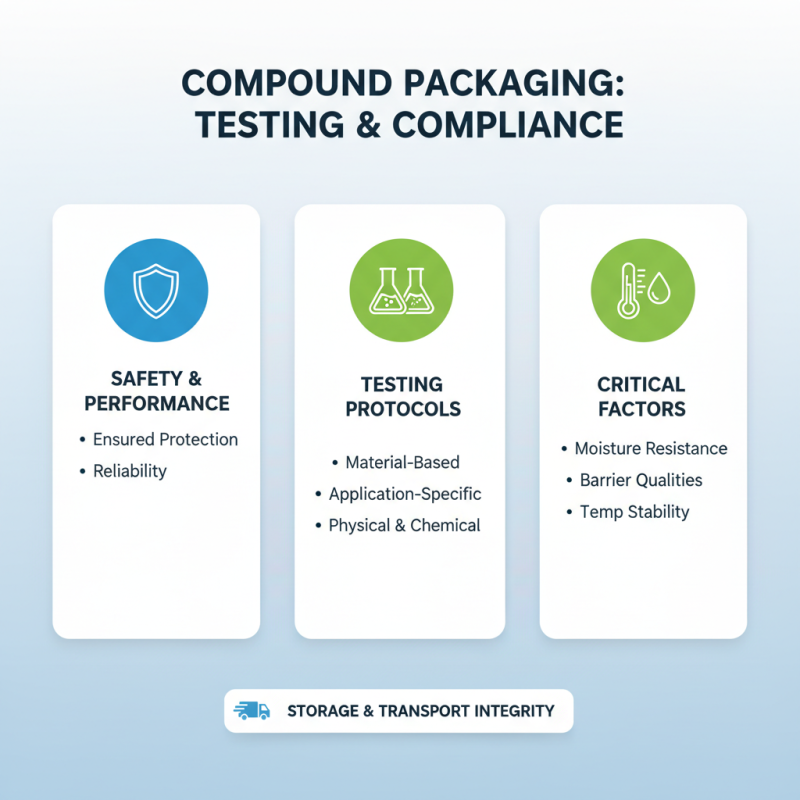
When selecting compound packaging products, it is vital to consider the testing and compliance requirements that ensure safety and performance. Testing protocols vary based on the materials used and the intended application of the packaging. Typically, these tests assess physical properties, chemical interactions, and the ability to protect contents under various conditions. For example, factors such as moisture resistance, barrier qualities, and the ability to withstand temperature changes are critical for maintaining product integrity during storage and transportation.

Compliance with industry standards is also essential in the selection process. Various regulatory bodies establish guidelines that compound packaging must adhere to, depending on the region and product type. Companies often need to conduct tests that comply with these regulations to demonstrate that their packaging materials are safe for use and effective in protecting products. This may involve certification processes or audits by third-party organizations. By understanding and fulfilling these testing and compliance requirements, businesses can eliminate risks associated with packaging failures and enhance customer trust in their products.

Register now