


Blog

How to Choose a Suction and Discharge Hose in 2026?

Choosing the right Suction And Discharge Hose in 2026 requires more than comparing prices and diameter charts. Field experience shows that hose failures often begin with overlooked details, such as vacuum rating, sharp bends, incompatible chemicals, or poorly matched couplings. A hose may look strong on a warehouse floor but collapse under suction beside a hot pump.

This guide examines the practical factors that influence safe and reliable selection. It considers inner diameter, working pressure, temperature range, abrasion resistance, flexibility, bend radius, and material compatibility. Manufacturer specifications remain essential, but they should be checked against actual operating conditions. A pump moving abrasive slurry needs different protection from one transferring clean water or food-grade liquids.

Real installations are rarely tidy.

Space may be limited. The hose may drag across concrete, twist during loading, or face repeated pressure surges. These conditions can expose weaknesses that a laboratory test does not reveal. For that reason, selection should combine technical data, maintenance records, and advice from qualified suppliers or engineers.

There is no universal hose for every application. That point deserves attention. Choosing only by nominal size can create leaks, reduced flow, or premature damage. In some cases, the most expensive option is still unsuitable.

The sections ahead explain how to compare hose construction, performance ratings, connection methods, inspection needs, and total service cost. They also highlight common assumptions that deserve reconsideration before purchase. A careful decision protects equipment, workers, products, and operating continuity.
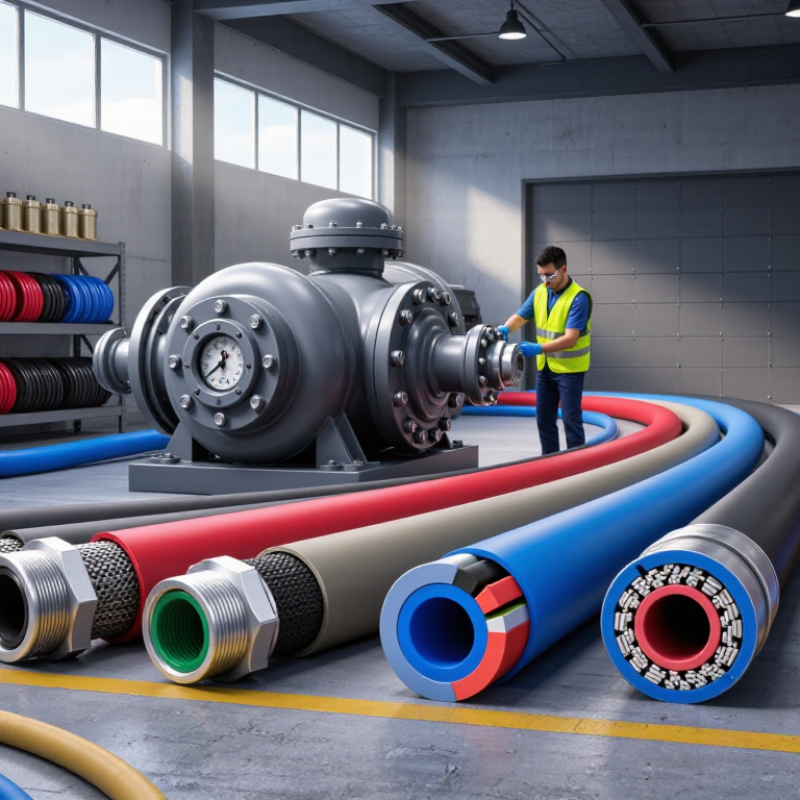
How to Choose a Suction and Discharge Hose in 2026?

Understanding Suction and Discharge Hose Functions

How to Choose a Suction and Discharge Hose in 2026?

A suction hose draws liquid toward a pump, while a discharge hose carries it away under pressure. Their functions are different, so treating them as interchangeable can cause early failure.

Suction service may create negative pressure. The hose therefore needs strong reinforcement to resist collapse. A discharge hose needs pressure-rated construction, especially near pumps, valves, and elevated outlets.

Start with the working conditions. Identify the liquid, temperature range, flow rate, pressure, and expected vacuum.

Check chemical compatibility from the hose manufacturer’s technical data, not from appearance alone. A clear hose may help operators see air pockets or sediment, but visibility does not prove chemical resistance.

Small details matter. Measure the actual connection diameter. An incorrect inner diameter can reduce flow and increase friction.

In practical installations, support the hose without sharp bends or twisting. Keep suction runs short where possible. A heavy hose hanging from a fitting can damage the connection over time.

Inspect for soft spots, cracks, exposed reinforcement, and flattened sections before each demanding operation. Replace questionable assemblies. Waiting for a leak is poor maintenance.

Selection is not always perfect on the first attempt. Fluid temperature can change, fittings may restrict flow, and field conditions can differ from specifications. Record those observations and adjust the next selection using measured data.

Identifying the Required Hose Material and Construction

Choosing a suction and discharge hose in 2026 starts with the conveyed material, not the color or price. Water, oils, chemicals, slurry, and food liquids each demand different inner-tube materials. A hose may look strong outside yet swell internally. That failure is easy to miss. Check a current chemical-compatibility chart, then confirm the exact concentration and operating temperature. Do not rely on memory. A hose rated for oil may soften after repeated exposure to a hotter mixture. Material selection must also consider odor transfer, cleaning agents, and sharp particles.

Construction decides how the hose behaves under pressure and vacuum. A suction hose needs a rigid spiral or embedded helix to resist collapse. Discharge service usually needs reinforcement layers that control expansion and handle working pressure. Textile plies suit many general applications, while wire reinforcement can improve vacuum resistance and crush recovery. More reinforcement is not automatically better. It can reduce flexibility and increase handling strain. Specify working pressure, vacuum rating, bend radius, temperature range, and coupling method together. One overlooked limit may shorten service life.

Tips: Measure the route before ordering. Compare inner diameter, not outside diameter. Leave room for movement. Inspect cuts, blisters, and exposed reinforcement before each shift. Replace questionable sections early. Keep records of fluid, temperature, pressure, and installation date. This habit improves future choices, although field conditions are often less tidy than the specification sheet.

How to Choose a Suction and Discharge Hose in 2026? - Identifying the Required Hose Material and Construction

Hose Material / Construction Typical Applications Suction Capability Typical Temperature Range* Abrasion Resistance Chemical Resistance Main Advantages Important Limitations
PVC helix-reinforced hose Water transfer, irrigation, drainage, light-duty liquid handling Good when the helix is rigid enough for the vacuum level Approximately -20°C to +60°C Low to medium Good for many dilute chemicals; verify compatibility Lightweight, economical, transparent options available, easy to handle Can harden in cold conditions; limited resistance to high heat, oils, and severe abrasion
EPDM rubber suction and discharge hose Water, hot water, mild chemicals, agricultural and industrial fluids Very good with textile reinforcement and embedded helix Approximately -40°C to +100°C High Very good against water, steam, and many dilute acids and alkalis Flexible, durable, weather-resistant, suitable for elevated temperatures Generally unsuitable for petroleum oils and many hydrocarbon-based fluids
Nitrile rubber (NBR) hose Fuel, diesel, lubricating oil, hydraulic oil, and oily wastewater Very good when reinforced with fabric and a vacuum-support helix Approximately -30°C to +80°C High Excellent for petroleum-based oils and fuels; limited with some solvents Good oil resistance, strong construction options, suitable for fuel-transfer service Usually less resistant to ozone and weathering than EPDM; temperature limits vary by compound
Thermoplastic polyurethane (TPU) hose Abrasive powders, granules, pellets, slurry, and material conveying Good to very good with a spiral reinforcement Approximately -40°C to +90°C Very high Good for oils and many industrial materials; chemical compatibility must be checked Excellent wear resistance, lightweight, flexible, and often available with a smooth bore Not suitable for every solvent, strong acid, or high-temperature application
Corrugated PTFE-lined hose Aggressive chemicals, solvents, pharmaceutical fluids, and high-purity transfer Available in vacuum-rated designs; confirm the specified vacuum rating Approximately -60°C to +260°C, depending on assembly design Medium Excellent against a very broad range of chemicals Very wide chemical and temperature capability; low fluid absorption Higher cost; corrugation can reduce flow efficiency and requires careful installation
Composite multi-layer hose Fuel, solvents, chemicals, loading arms, and transfer between mobile equipment Good to very good when designed with an anti-collapse helix Commonly approximately -30°C to +100°C Medium to high Depends on the liner; select the liner for the specific fluid Very flexible, lightweight for its pressure capability, and easy to route Layer damage may be difficult to detect; compatibility and grounding requirements are critical
Rubber hose with textile and steel-wire reinforcement Heavy-duty water, slurry, mining, dredging, and industrial discharge service Excellent for high-vacuum service when specifically vacuum-rated Usually approximately -30°C to +80°C High to very high Depends on the tube compound; abrasion-resistant liners are available Strong, crush-resistant, and suitable for demanding suction and discharge duties Heavier and less flexible; minimum bend radius must be respected
*Selection note: Temperature ranges and pressure ratings are indicative operating ranges only. The actual limit depends on the hose compound, reinforcement, diameter, fittings, fluid concentration, vacuum level, surge pressure, and service conditions. Always verify the manufacturer’s technical data and applicable standards before use.

Matching Hose Size, Pressure, Temperature, and Compatibility

How to Choose a Suction and Discharge Hose in 2026?

A reliable hose starts with size, not appearance. Match the hose bore to the pump’s inlet and outlet requirements. A narrow suction hose can increase friction, reduce flow, and create cavitation. The Hydraulic Institute recommends checking velocity and pressure loss during pump selection. In practice, I measure the connection, then verify the manufacturer’s flow chart. Guessing is expensive.

Pressure ratings need careful reading. Select a hose whose continuous working pressure exceeds the system’s maximum pressure, including startup surges. The Rubber Manufacturers Association Hose Handbook emphasizes that working pressure is not burst pressure. A hose rated for 10 bar should not operate continuously at 10 bar. Leave a safety margin. It may feel conservative, but pressure spikes are often invisible.

Temperature and compatibility matter just as much. Check both the fluid temperature and the surrounding air temperature. A hose suitable for water may fail quickly with oil, solvents, or abrasive slurry. ISO 1307 provides standardized hose dimensions and tolerances, but it does not guarantee chemical compatibility. Review the compatibility chart, bend radius, and coupling material together. I still see hoses selected correctly on paper, then installed with a bend tighter than the stated minimum. That mistake deserves another inspection. Temperature changes can also stiffen the cover, loosen couplings, and shorten service life.

Selecting the Right Hose for Specific Operating Conditions

How to Choose a Suction and Discharge Hose in 2026?

Selecting the right hose begins with the operating conditions, not the connection size. Identify the fluid, temperature, pressure, suction strength, and flow rate. Measure it. Do not guess. A suction hose must resist collapse under vacuum, while a discharge hose must withstand internal pressure. These duties require different reinforcement, even when both hoses carry the same liquid.

For water, a flexible hose may be sufficient, but abrasive slurry needs a tougher inner tube and stronger cover. Chemical service requires verified compatibility at the actual temperature and concentration. Hot fluids can weaken materials faster than expected. Oil exposure may also swell unsuitable rubber. Check the minimum bend radius, because a sharp bend near the coupling can restrict flow and cause early failure. That detail matters.

Static electricity deserves attention when transferring certain dry or flowing materials. Use a hose designed for conductivity, then verify grounding through the complete assembly. In practical inspections, damaged covers, exposed reinforcement, and loose couplings are frequent warning signs. Replace questionable components before leakage becomes an operational problem. A useful admission is that a larger hose is not automatically safer. It may be too heavy, difficult to support, or poorly matched to the pump. Review the hose data sheet, confirm pressure ratings under real temperatures, and inspect the assembly after installation. Conditions change. A hose selected for clean water may perform poorly after the process gains heat, solids, or stronger chemicals.

Inspecting, Installing, and Maintaining the Chosen Hose

Choosing a suction and discharge hose is only part of the job. Correct inspection, installation, and maintenance determine whether it performs safely.

Before installation, inspect the hose cover for cuts, blisters, exposed reinforcement, and hardening. Bend it gently and check for cracks near both couplings. The inside should be clean and free from loose material. Confirm the hose suits the fluid, temperature, suction level, and discharge pressure. Check the coupling, gasket, clamp, and safety restraint as separate components.

I once found a small split hidden beneath a clamp. It could have caused a serious leak.

During installation, keep the hose as straight as practical. Avoid sharp bends, twisting, dragging, and contact with hot surfaces. Support heavy sections without crushing the hose. The suction side must remain airtight, because a tiny air leak can reduce flow and collapse a poorly supported hose. On the discharge side, secure connections firmly, but do not overtighten them. Follow the manufacturer’s torque guidance when available.

I used to rely too much on visual tightness. That was not reliable.

After use, drain the hose and flush it with a compatible cleaning fluid. Remove trapped liquid before storage. Keep it capped, dry, shaded, and away from oils or sharp edges. Inspect it before every shift, even when it looks new.

Replace any hose with exposed reinforcement, permanent flattening, or damaged couplings. Some inspection intervals may need adjustment. Heavy abrasion, frequent pressure changes, and outdoor storage can shorten service life unexpectedly.

Register now