



Blog
How to Choose Stone Composite Floor in 2026?
Choosing a Stone Composite Floor in 2026 requires more than comparing colors and prices. New flooring products often combine limestone powder, polymers, stabilizers, and printed surface layers. Their appearance can resemble oak, slate, or polished concrete. Performance, however, depends on the full construction. Core density, locking design, wear-layer thickness, surface texture, and backing quality all deserve attention.
Real rooms reveal details that brochures hide. A sample may look warm beside a showroom wall but appear gray under kitchen lighting. It may also sound hollow when installed over a hard subfloor. Place samples near windows, cabinets, and doorways. Drag a dining chair carefully across the surface. Check whether the texture collects dust. Moisture exposure matters too, especially near entrances, laundry areas, and bathrooms. It looks simple. It is not always simple.
This guide examines how to choose Stone Composite Floor with practical, evidence-based criteria for 2026. Manufacturer test reports, installation instructions, warranty terms, and emissions documentation should support every serious decision. A trusted supplier should explain tolerances, expansion gaps, subfloor limits, and replacement procedures clearly. Independent certifications can add confidence, but certification names require verification. Not every marketing claim means the same thing. Even experienced buyers can miss a weak locking edge or unsuitable underlayment. No floor fits every building. A cooler surface may suit sunny rooms, while a softer acoustic backing may help apartments. Careful selection balances durability, comfort, maintenance, appearance, and long-term value.
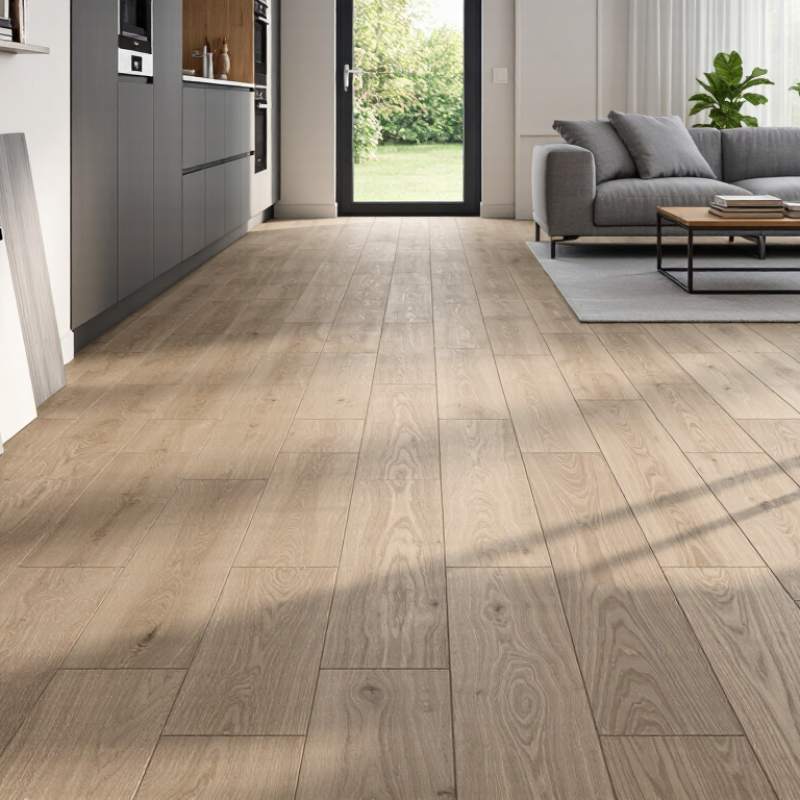
Understanding Stone Composite Flooring and Its Main Types
How to Choose Stone Composite Floor in 2026?
Stone composite flooring combines mineral filler, polymers, and a printed decorative layer. Its rigid core resists dents and supports floating installation. The two main types are SPC and WPC. SPC uses more limestone filler, creating a firm, dense board. WPC uses a foamed polymer core, so it feels warmer and slightly softer underfoot. Mineral-core products may vary in formulation, so the name alone proves little. Floor Covering Weekly’s 2024 U.S. Market Review reported approximately $9.8 billion in resilient flooring sales for 2023. That demand reflects practical use, not automatic quality.
Check the technical sheet before choosing a floor. Compare core thickness, wear-layer thickness, locking strength, dimensional stability, and acoustic ratings. A thicker board can hide minor subfloor unevenness, but it cannot correct serious moisture or level problems. SPC often suits kitchens, retail areas, and busy hallways. WPC may feel better in bedrooms or living rooms. However, SPC is not automatically quiet. Without an underlay or suitable subfloor, footsteps can sound sharp. This is where many product comparisons become too optimistic.
Tips: Request test reports, installation instructions, and moisture limits. Inspect samples beside daylight and warm lighting. Check whether the warranty covers commercial traffic. Leave expansion gaps around walls and fixed cabinets. I would also keep one spare carton. Color batches can change, and repairs years later may be surprisingly difficult. Recognized testing laboratories and documented performance data offer stronger evidence than sales claims.
Assessing Room Conditions and Flooring Performance Requirements
How to Choose Stone Composite Floor in 2026?
Assessing Room Conditions and Flooring Performance Requirements
Choosing stone composite flooring should begin with the room, not the color chart. During site inspections, I check moisture, sunlight, temperature changes, and subfloor stability. A ground-floor room may face dampness from concrete. A sunny hallway may experience repeated thermal expansion. Moisture changes everything. Use a moisture meter and inspect for cracks, soft areas, or uneven joints. The flooring cannot correct a weak subfloor.
Then match performance requirements with daily use. A busy entrance needs strong wear resistance and a surface that cleans easily. Kitchens need protection against splashes and dropped utensils. Bathrooms require careful attention to moisture control, edge sealing, and installation instructions. Bedrooms may prioritize underfoot comfort and sound reduction. In larger rooms, expansion space becomes more important. Allow for movement.
I once focused too heavily on thickness and overlooked subfloor movement. That shortcut looked efficient, but minor gaps appeared later. Thickness alone does not guarantee long-term performance. Check the wear layer, dimensional stability, slip resistance, maintenance needs, and warranty conditions. Ask whether the product suits radiant heating, if that system is installed. Follow the manufacturer’s temperature limits and preparation requirements. A professional installer should document moisture readings and acclimation conditions. Even careful assessments have limits, especially in older buildings with hidden dampness.
Comparing Core Materials, Surface Finishes, and Construction Quality
How to Choose Stone Composite Floor in 2026?
Stone composite flooring is not defined by its stone content alone. The core controls stability, comfort, and moisture tolerance. SPC cores often combine limestone filler with PVC, creating a dense, rigid board. WPC cores add a foamed layer, which feels warmer underfoot but may compress more easily. Mineral cores can deliver strong dimensional stability, although they often cost more. Grand View Research reported that the global flooring market was valued at approximately USD 460 billion in 2023, showing why product claims deserve careful comparison. Large market growth does not guarantee better construction.
Surface quality needs equal attention. A thicker wear layer can improve resistance to scratching, but the finish chemistry and embossing quality also matter. UV-cured coatings usually protect printed patterns, while polyurethane finishes can improve cleaning performance. Look for abrasion data tested under recognized standards, such as EN 16511 or ASTM procedures. On site, I have seen attractive floors fail because locking joints were poorly milled. ASTM F3261 addresses rigid polymeric flooring, but installation quality still determines real performance. A perfect specification cannot rescue an uneven subfloor.
Tips: Check the core density, wear-layer thickness, locking tolerance, and declared test method. Confirm subfloor flatness and moisture readings before installation. Leave the recommended expansion gap. Thicker is not always better. Cheap underlayment can also create hollow sounds, which many buyers notice only after moving furniture.
Checking Safety, Installation Methods, Maintenance, and Service Life
How to Choose Stone Composite Floor in 2026?
Safety should be checked before appearance. Ask for test documents covering slip resistance, wear performance, emissions, and fire behavior. Requirements vary by region, so verify them with a qualified local professional. I also inspect the backing and edges for cracks, sharp points, or visible warping. A perfect-looking plank can still hide poor construction.
Installation decides much of the floor’s service life. The subfloor must be dry, clean, and reasonably level. Uneven areas can create hollow sounds and stress the locking joints. Measure moisture before installation, not after problems appear. Leave the recommended expansion space near walls, door frames, and fixed cabinets. Direct sunlight may also require blinds or window film. In real projects, rushed preparation causes more failures than ordinary foot traffic. That is easy to underestimate.
Maintenance is simple, but not careless. Sweep grit regularly because sand works like fine sandpaper under shoes. Wipe spills quickly with a damp microfiber mop and a pH-neutral cleaner. Avoid excessive water, harsh solvents, and abrasive pads. Place protective pads beneath heavy furniture. Check busy entrances, kitchen joints, and bathroom edges every few months. Service life depends on traffic, moisture, sunlight, cleaning habits, and installation quality. Published lifespan figures are useful, but they are not promises. I would rather choose a floor with clear test records and practical repair guidance than trust a polished sales claim.
Balancing Cost, Sustainability, Warranty, and Overall Value in 2026
How to Choose Stone Composite Floor in 2026?
Stone composite flooring can look economical, but the purchase price tells only part of the story. Compare material costs with subfloor preparation, delivery, installation, and future repairs. A cheaper plank may require extra leveling. That can change the budget quickly. Request written quotations with identical measurements and installation conditions. Keep a small spare box for later repairs.
Sustainability needs evidence, not attractive wording. Ask for recycled content, product testing, emissions information, and responsible packaging details. A durable floor can reduce replacement waste over time. However, recycled content alone does not prove a lower environmental impact. Review the product’s expected service life and disposal options. Local conditions matter too.
Warranty language deserves patient reading. Check coverage for wear, moisture damage, locking systems, and installation defects. Confirm whether professional installation is required. Also check exclusions, claim procedures, and whether the warranty transfers to a future owner. Some warranties sound impressive until these details appear. Overall value depends on comfort, maintenance, appearance, and repairability. Test samples under daylight and near a doorway. I would not ignore foot noise or coldness, even when the surface looks convincing. A technically strong floor can still feel wrong in daily use.
How to Choose Stone Composite Floor in 2026? - Balancing Cost, Sustainability, Warranty, and Overall Value in 2026
A practical comparison of common stone composite flooring specifications and ownership factors
| Evaluation Dimension | Budget SPC | Mid-Range SPC | Premium SPC | What to Check Before Buying |
|---|---|---|---|---|
| Material composition | PVC-based core with mineral filler; specifications may be limited | Rigid PVC and limestone-based core with more consistent density | Higher-density core, stronger wear layer, and tighter dimensional tolerances | Request the technical data sheet, total thickness, core density, and wear-layer thickness |
| Typical material cost | Approximately US$1.50–$2.50 per sq. ft. | Approximately US$2.50–$4.50 per sq. ft. | Approximately US$4.50–$7.00+ per sq. ft. | Compare like-for-like products and confirm whether underlayment, trim, and delivery are included |
| Estimated installed cost | Approximately US$3.50–$6.50 per sq. ft. | Approximately US$5.00–$9.00 per sq. ft. | Approximately US$7.00–$12.00+ per sq. ft. | Actual labor varies with subfloor preparation, room layout, location, and removal of old flooring |
| Usable service life | About 10–20 years with suitable residential use | About 15–25 years with proper installation and maintenance | About 20–30 years in appropriate residential or light-commercial conditions | Service life depends on traffic, sunlight, moisture, cleaning practices, and subfloor quality |
| Wear-layer thickness | Typically 6–12 mil | Typically 12–20 mil | Typically 20–30 mil or more | For busy homes, pets, or light commercial use, a thicker wear layer generally offers better abrasion resistance |
| Water resistance | Water-resistant surface; standing water still requires prompt removal | Usually suitable for kitchens, bathrooms, and entry areas when joints are correctly installed | Strong moisture performance, subject to subfloor, perimeter, and installation limitations | Confirm the exact water-related warranty language; “waterproof” does not mean flood-proof |
| Recycled content | Often 0–10%; product-specific | Often 5–20%; product-specific | May reach 10–30% or more when verified by documentation | Ask whether the percentage is pre-consumer or post-consumer and request third-party verification |
| Indoor-air emissions | Performance varies; certification may not be included | Many products are available with low-emission testing | More likely to provide documented low-emission certification | Look for current third-party indoor-air-quality documentation, not only marketing claims |
| Expected warranty range | Approximately 10–20 years residential | Approximately 20–30 years residential | Approximately 25– lifetime residential; commercial coverage is usually shorter | Check exclusions for moisture, sunlight, rolling loads, installation errors, and color change |
| Maintenance requirements | Sweep or vacuum regularly; damp mop with a neutral cleaner | Similar low-maintenance routine; use protective pads under furniture | Similar routine, with greater resistance to surface wear when properly maintained | Avoid abrasive cleaners, steam unless approved, excessive water, and rubber-backed mats |
| Subfloor tolerance | Requires a clean, dry, and reasonably flat subfloor | Better dimensional stability, but still requires proper leveling | More robust construction does not eliminate subfloor preparation requirements | Follow the installation guide; uneven floors can cause joint movement, noise, or premature failure |
| Best value profile | Lowest upfront cost for light-use rooms and short-to-medium holding periods | Balanced choice for most homes seeking durability and moderate cost | Best suited to demanding traffic, longer ownership, and stronger documentation needs | Evaluate total cost of ownership rather than price per square foot alone |