



Blog

Top 10 Types of Automatic Die Cutting and Creasing Machines

Choosing the right Automatic Die Cutting And Creasing Machine affects output quality, waste, labor, and delivery reliability. A carton plant may process thousands of sheets daily, yet one poorly adjusted stripping unit can create hours of rework. The scorecard should examine cutting accuracy, creasing consistency, sheet size, speed, material range, automation, safety controls, and maintenance access. Small details matter. A clean feed table matters. So does stable pressure.

Dr. Markus Heering, a respected printing and paper technology specialist, has stated, “Productivity matters only when quality remains stable.” This principle guides our examination of the top ten machine types. Each design serves a different production reality, from compact folding-carton lines to high-volume packaging systems with inline stripping and blanking. Experienced operators will also consider tooling changeover time, sensor reliability, energy use, and operator training. A faster machine is not automatically the better investment. That assumption deserves scrutiny.

This guide compares practical strengths and limitations rather than repeating catalogue claims. It considers how machines behave with coated board, corrugated sheets, synthetic materials, and delicate printed surfaces. Real production rarely looks perfect. Dust accumulates. Registration shifts. Tooling wears. The best equipment leaves room for correction and disciplined inspection. Readers should verify specifications with manufacturers, request sample trials, and measure results against their own substrates and order sizes. That extra step can prevent an expensive mismatch. Conversely, no ranking can replace skilled setup, consistent materials, and responsible maintenance.
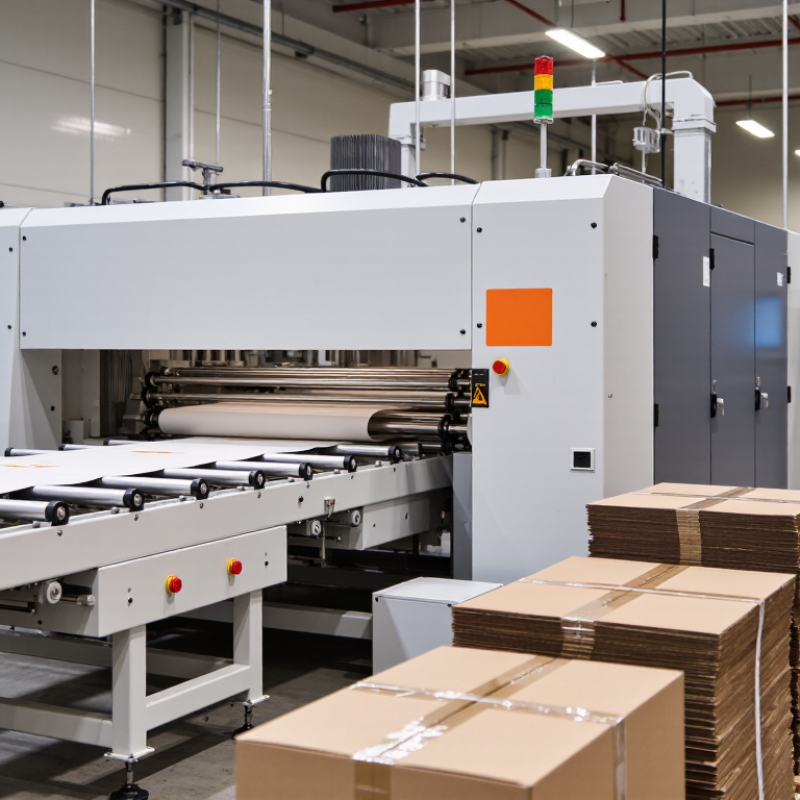
Top 10 Types of Automatic Die Cutting and Creasing Machines

Automatic Die Cutting Technologies: Flatbed, Rotary, Platen, and Laser Systems

Automatic Die Cutting And Creasing Machines now coverten practical configurations, but four technologies dominate daily production: flatbed, rotary, platen, and laser systems. Each handles pressure, tooling, and material differently.

Flatbed machines use a shaped die on a reciprocating board. They suit cartons, corrugated sheets, labels, and short production runs. Operators can change tooling quickly and inspect registration closely.

Rotary systems use cylindrical dies and continuous web feeding. They deliver high speed for labels, flexible packaging, and repeated shapes. Waste removal can be efficient, although setup errors become expensive at speed.

Platen machines apply direct pressure between two plates. They produce clean creases in heavier stock and remain useful for rigid packaging.

Laser systems cut with focused energy, removing the need for physical dies. They work well for prototypes, variable designs, and fine internal details. Some integrated models add digital creasing or scoring. Heat can darken sensitive materials, however. Test samples matter.

Hybrid flatbed-laser systems combine tooling strength with design flexibility. Rotary-slotting units support corrugated formats, while sheet-fed and web-fed versions match different production flows. Foil-capable, stripping-capable, and multi-station machines complete the broader ten-type range.

In real workshops, the fastest machine is not always the best choice. I have seen production slow after poor dust control and inaccurate sheet feeding. Waste matters. Material thickness, grain direction, crease depth, and registration tolerance should guide selection. No system is perfect.ե

Ten Machine Types Compared by Speed, Pressure, Format, and Creasing Accuracy

Automatic die cutting and creasing machines differ sharply in speed, pressure, format, and creasing accuracy. Flatbed platen machines deliver strong, even pressure for folding cartons and corrugated sheets. Sheet-fed models often exceed 7,000 sheets per hour, depending on substrate and tooling. Rotary machines run continuously and suit long production runs. Web-fed rotary systems prioritize speed, while label die cutters favor narrow formats and fine registration. Folding-carton, corrugated-board, hot-foil, stripping, and hybrid die-cutting machines complete the ten main categories.

Format changes the decision. Large-format flatbeds handle oversized boards, but they consume more floor space. Narrow web systems waste less material during short runs. Pressure also matters. Thick board needs stable tonnage, not simply a faster stroke.

According to Smithers’ The Future of Global Packaging to 2028, packaging demand is moving toward higher-value, customized formats. That trend increases the need for fast setup and repeatable creasing accuracy. Small registration errors remain visible on a finished carton.

Creasing accuracy depends on tool quality, board moisture, pressure control, and operator experience. Modern servo systems can reduce variation, yet they cannot correct poorly conditioned stock. PMMI industry reports continue to identify automation and shorter production runs as major packaging priorities. No machine wins every test. In practice, a slower flatbed may outperform a rotary machine on complex cartons. My own comparison would measure usable output, not the advertised maximum. That distinction is easy to miss.

Sheet-Fed Platen Presses: Up to 7,500 Sheets per Hour and 0.1 mm Precision

Sheet-fed platen presses remain a practical choice for folding cartons, labels, and specialty paper products. A modern machine can reach up to 7,500 sheets per hour, with positioning precision near 0.1 mm. That figure matters when creasing must align with printed graphics, window cuts, or narrow folding panels.

Industry data supports this demand. Smithers’ The Future of Global Packaging to 2028 identifies continued growth in global packaging consumption, especially for efficient, customized formats. High-speed die cutting helps converters answer shorter production runs without sacrificing repeatability. However, the rated speed is not the daily average. Stock thickness, grain direction, stripping complexity, and make-ready time can reduce real output. This is where practical testing matters. A press may run quickly, yet produce more waste if pressure settings drift. Precision is a process, not only a specification.

Tips: Test the actual substrate before purchase. Check feeding stability, gripper marks, crease depth, and waste removal. Record setup time for three repeated jobs. Ask for measured samples, not only machine brochures. A 0.1 mm claim can be useful, but material movement may still create visible variation. Operators should also inspect sheets during production, because small alignment errors become expensive across thousands of sheets.

Top 10 Types of Automatic Die Cutting and Creasing Machines – Sheet-Fed Platen Presses: Up to 7,500 Sheets per Hour and 0.1 mm Precision

No. Machine Type Operating Principle Typical Maximum Speed Typical Registration or Creasing Precision Common Sheet or Web Material Typical Material Thickness Best-Suited Applications Main Advantages
1 Automatic Sheet-Fed Platen Die Cutting and Creasing Press Flat platen closes against a fixed cutting and creasing forme to process individual sheets. Up to 7,500 sheets/hour Down to 0.1 mm under suitable production conditions Paper, paperboard, corrugated board, laminated sheets 0.1–2.0 mm Folding cartons, labels, paper bags, gift boxes, inserts and commercial packaging High cutting force, accurate creasing, flexible tooling and strong repeatability
2 Automatic Rotary Die-Cutting Machine A cylindrical magnetic or solid rotary die cuts material continuously as it passes between rotating cylinders. Up to 150 m/min Approximately 0.2–0.5 mm Labels, pressure-sensitive stock, paper, film and thin board 0.05–0.8 mm Labels, tags, flexible packaging, security seals and high-volume roll products Continuous production, low waste at scale and fast tooling changes for repeat jobs
3 Flatbed Digital Die-Cutting and Creasing Machine Computer-controlled knife, crease wheel or digital cutting tool processes sheets without a conventional die. Up to 2,000 sheets/hour Approximately 0.2–0.5 mm Paperboard, corrugated board, synthetic sheets and laminated stock 0.2–4.0 mm Short-run packaging, prototypes, samples, personalized cartons and retail displays No physical die required, rapid setup and economical for variable designs
4 Automatic Rotary Slitting, Scoring and Perforating Machine Rotating knives, scoring tools and perforation blades convert a continuous web or sheet stack. Up to 120 m/min Approximately 0.2–0.5 mm Paper, films, laminates, foil and lightweight board 0.03–1.0 mm Roll converting, ticket stock, forms, sachet materials and technical films Combines several inline operations and supports continuous web production
5 Automatic Corrugated Sheet Flatbed Die-Cutter A large-format flatbed platen applies cutting, creasing and stripping operations to corrugated sheets. Up to 6,000 sheets/hour Approximately 0.3–0.8 mm Single-wall and selected double-wall corrugated board 1.5–8.0 mm Shipping cases, shelf-ready packaging, displays and heavy-duty cartons Handles thicker board, produces complex structural designs and supports large sheets
6 Automatic Label Die-Cutting Press Inline or offline rotary, semi-rotary or flatbed tooling cuts label shapes and matrix waste. Up to 100 m/min Approximately 0.1–0.3 mm Self-adhesive paper, film, foil and liner materials 0.04–0.6 mm Pressure-sensitive labels, product labels, barcode labels and stickers Accurate contour cutting, matrix removal and compatibility with inline finishing
7 Automatic Foil Stamping and Die-Cutting Press Combines platen die cutting and creasing with heated foil transfer using a dedicated stamping unit. Up to 6,000 sheets/hour Approximately 0.1–0.3 mm Coated paper, paperboard, synthetic sheets and laminated stock 0.15–1.5 mm Luxury cartons, invitations, covers, certificates and premium retail packaging Integrates cutting, creasing and decorative foil application in one production flow
8 Automatic Embossing and Creasing Press Male and female embossing formes create raised or recessed designs while integrated tools crease the sheet. Up to 5,500 sheets/hour Approximately 0.2–0.4 mm Paper, board, covers, invitation stock and coated sheets 0.15–1.2 mm Book covers, greeting cards, premium packaging and security-print features Creates tactile effects and combines decorative forming with structural creasing
9 Automatic Blanking and Stripping Press After die cutting, gripper bars and stripping tools separate finished blanks from waste and remove internal waste. Up to 7,000 sheets/hour Approximately 0.2–0.5 mm Paperboard, folding carton stock and selected corrugated sheets 0.2–2.0 mm High-volume cartons, multi-up packaging layouts and intricate cutout designs Automates waste removal, reduces manual labor and improves downstream packing efficiency
10 Automatic Paper Bag and Handle Die-Cutting Machine Servo-controlled feeding and rotary or flatbed tooling cut handles, windows, gussets and bag blanks. Up to 8,000 sheets/hour Approximately 0.2–0.5 mm Kraft paper, coated paper, laminated paper and lightweight board 0.08–0.6 mm Shopping bags, takeaway bags, bakery bags and paper packaging components High-speed repetitive production with integrated handle-hole and window cutting
Typical industry ranges are shown for comparison. Actual output, precision and material capability depend on sheet size, substrate structure, tooling quality, job layout, machine configuration and operating conditions.

Rotary Die Cutters: Continuous Production at Over 10,000 Impressions per Hour

Rotary die cutters are built for continuous production, with some systems exceeding 10,000 impressions per hour. Their cylindrical dies rotate with the web, keeping material moving through the cutting and creasing station. This design supports steady output for folding cartons, labels, corrugated sheets, and flexible packaging components. Speed is not everything. Stable feeding matters more.

In production practice, operators monitor registration, die pressure, web tension, and waste removal. A small alignment error can repeat thousands of times. That becomes expensive quickly. Clean creasing also depends on suitable make-ready sheets, sharp tooling, and accurate substrate settings.

Paperboard may run smoothly, while thicker laminated stock needs slower acceleration and tighter inspection intervals. Experienced technicians listen for unusual vibration and watch for uneven scoring.

The headline capacity can mislead.

A machine rated above 10,000 impressions per hour may not maintain that rate with every material or design. Complex layouts, frequent die changes, and delicate coatings reduce practical speed. I have found that rushed setup often creates more downtime than careful preparation. Operators should record pressure settings, defect patterns, and maintenance intervals. These records improve repeatability, although they are rarely perfect. Bearings, anvil covers, and stripping components still require regular checks. Safe guarding, lockout procedures, and trained supervision remain essential during adjustments, even when production targets are demanding.

Selecting Machines by Substrate, GSM Range, Automation Level, and Safety Standards

Top 10 Types of Automatic Die Cutting and Creasing Machines

Selecting an automatic die cutting machine starts with the substrate, not the machine name. Paperboard, corrugated board, labels, plastics, and laminated sheets behave differently under pressure. Flatbed machines suit rigid cartons and thick boards. Rotary systems often handle continuous web materials at high speed. Sheet-fed models support accurate registration for printed packaging. Servo-driven machines can improve control, especially during frequent format changes.

GSM range matters just as much. A lightweight 120 GSM sheet may need gentle feeding and precise stripping. A 600 GSM board requires stronger pressure, wider gripper adjustment, and stable tooling.

Automation level also affects labor, waste, and maintenance. Feeding, stripping, blanking, and quality inspection can be integrated, but more automation creates more adjustment points. I have seen efficient lines lose time because operators lacked practical training. More automation is not always better.

Tips: Test your actual substrate before purchase. Include curl, coating, moisture, and grain direction. Ask for production samples across the full GSM range. Check guarding, interlocks, emergency stops, noise control, and lockout procedures. Verify compliance with applicable regional machinery and electrical safety standards. Leave space for safe maintenance access. A perfect specification rarely exists, so record failed trials honestly and revise the selection.

Register now