Blog

China Top Electric Furnace Transformer Manufacturers

China has become an important manufacturing base for industrial transformer equipment. Its leading suppliers serve steel mills, foundries, ferroalloy plants, and other high-temperature production lines. This introduction examines China’s top Electric Furnace Transformer manufacturers through practical engineering criteria, not promotional claims alone.

Martin J. Heathcote, a recognized transformer specialist and author of The J&P Transformer Book, offers a useful principle: “A transformer must be matched to its duty, not merely its rating.” That warning matters in furnace applications. An Electric Furnace Transformer faces repeated thermal shocks, high short-circuit forces, harmonic currents, and demanding load cycles. A catalog capacity cannot reveal everything.

Reliable evaluation begins with operating details. Engineers should check furnace type, secondary voltage, current range, impedance, cooling method, tap-changing design, and short-circuit withstand capability. Oil temperature, radiator condition, bushing quality, and monitoring systems also deserve close attention. A strong manufacturer should explain these points clearly and provide test records, drawings, inspection support, and after-sales service.

Factory experience matters. So does evidence.

The best Chinese suppliers often combine automated winding equipment with skilled testing teams. They may offer copper windings, reinforced insulation, flexible tap systems, and customized secondary terminals. However, no ranking is perfect. Delivery performance can vary between projects, and impressive specifications may hide weak maintenance support. Buyers should verify references, factory capacity, certification, and response times before signing a contract.

This guide focuses on manufacturers that demonstrate technical depth, production consistency, and dependable communication. The goal is simple: help industrial buyers select an Electric Furnace Transformer that remains stable beside the furnace, even when the working environment is far from gentle.

China Top Electric Furnace Transformer Manufacturers

Electric Furnace Transformers: Purpose, Design, and Core Functions

China Top Electric Furnace Transformer Manufacturers

Electric Furnace Transformers: Purpose, Design, and Core Functions

Electric furnace transformers convert high-voltage power into low-voltage, high-current energy. This output supports arc, resistance, and induction furnace operations. Their main purpose is stable energy delivery during demanding melting cycles. Furnace loads change quickly, sometimes within seconds. The transformer must respond without excessive voltage drop or overheating.

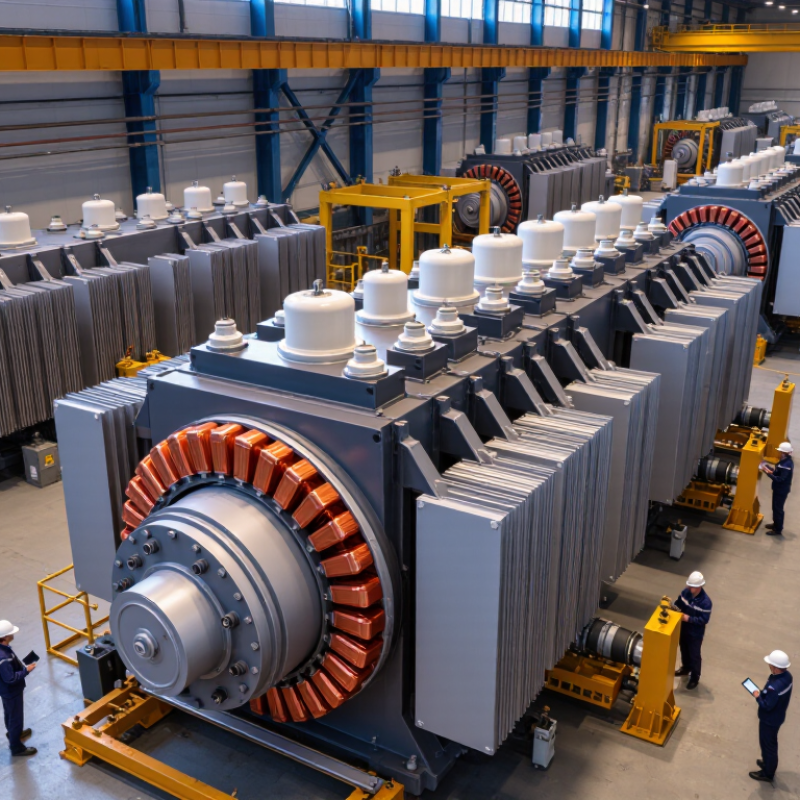
The design begins with the core, windings, insulation, and cooling system. Copper windings usually handle intense current efficiently. Strong insulation separates high-voltage and low-voltage sections safely. A suitable impedance helps control short-circuit forces and furnace fluctuations.

On-load tap changers can adjust voltage while production continues. Oil circulation, radiators, and temperature sensors remove heat from active components.

Safety depends on more than rated capacity. Engineers check insulation strength, temperature rise, impedance, noise, and partial discharge performance. Factory testing should include winding resistance and voltage-ratio verification. Field engineers also inspect connections, oil condition, grounding, and cooling airflow.

Small details matter here. A loose terminal can create heat, vibration, and costly downtime.

No design is perfect. An overly conservative transformer may waste space and investment, while a smaller unit may age too quickly. Real operating data should guide final selection, including furnace capacity, duty cycle, harmonics, and expected overloads.

China’s Electric Furnace Transformer Manufacturing Industry

China’s electric furnace transformer manufacturing industry serves steel, foundry, ferroalloy, and other high-load operations. These transformers must handle repeated current surges, thermal cycling, and demanding furnace schedules. Engineering teams usually match voltage, impedance, cooling method, and duty cycle to the furnace design. Small errors can increase energy loss or shorten insulation life. Details matter.

Manufacturing quality depends on core assembly, winding tension, insulation treatment, and tank welding. Experienced plants use controlled drying systems and vacuum oil filling to reduce moisture risks. Routine tests may include winding resistance, ratio checks, impedance measurement, temperature-rise testing, and partial-discharge inspection. Short-circuit withstand capability also deserves close attention. A factory certificate alone is not enough; test records and traceability provide stronger evidence.

China’s supplier base benefits from broad electrical-material supply chains and experienced transformer engineers. Many manufacturers can support custom ratings, tap arrangements, auxiliary systems, and site-specific cooling requirements. However, not every workshop has equal process control or field experience. Buyers should review similar furnace applications, inspection procedures, spare-part support, and response times. Communication can still be imperfect. Technical assumptions should be written clearly before production begins. During acceptance, witnessed testing and careful review of drawings often reveal issues that polished sales documents miss.

Leading Chinese Manufacturers and Their Product Capabilities

China Top Electric Furnace Transformer Manufacturers

China’s electric furnace transformer sector is shaped by its large steel industry. The World Steel Association reported about 1.0 billion tonnes of Chinese crude steel output in 2024, exceeding half of global production. This scale demands transformers that tolerate repeated thermal shocks, unstable arc currents, and severe short-circuit stress. Leading Chinese manufacturers typically supply arc furnace, ladle furnace, and submerged arc furnace transformers. Their product ranges often cover medium and ultra-high voltage applications.

Capabilities are becoming more measurable. Manufacturers commonly use vacuum pressure impregnation, copper windings, oil circulation, and on-load tap changers for demanding furnace cycles. Factory testing usually includes temperature-rise, insulation, impedance, and short-circuit assessments under IEC 60076 requirements. Some suppliers also provide online monitoring for oil temperature, dissolved gas, vibration, and bushing condition. Useful details matter. A compact cooling panel can reduce installation space, while reinforced tank structures help control vibration near the furnace floor.

The International Energy Agency identifies industrial electrification as a major pathway for reducing fossil-fuel use, although grid capacity remains a constraint. This supports continued demand for efficient furnace transformers, but efficiency claims need independent test records. Not every catalog figure reflects field performance. Buyers should compare loss data, tap-change durability, spare-part availability, and service response during a real production cycle. A gap remains: some technical documents describe rated capacity clearly, but provide limited evidence for harmonic heating and long-term overload operation.

Key Standards, Technologies, and Quality Evaluation Criteria

China Top Electric Furnace Transformer Manufacturers

Selecting an electric furnace transformer requires more than comparing rated capacity and delivery dates. Experienced buyers examine IEC 60076 and applicable GB/T 1094 requirements before reviewing factory claims. These standards guide insulation testing, temperature-rise limits, dielectric performance, and short-circuit strength. Local grid conditions also matter, especially fluctuating loads, harmonics, and frequent furnace starts.

Modern units often use copper windings, reinforced insulation, and oil or gas cooling systems. On-load tap changers can control furnace voltage during production changes. However, tap-changer endurance deserves close attention. A specification may look impressive while neglecting switching frequency or maintenance access. Factory engineers should verify core loss, load loss, impedance tolerance, and cooling performance through documented tests.

Quality evaluation should include material certificates, winding resistance checks, impulse tests, partial-discharge measurements, and temperature-rise testing. Witnessing factory acceptance tests can reveal loose connections, unusual vibration, or unstable instruments. Inspectors should compare recorded values with design calculations, not only accept pass-or-fail statements. Traceability is essential for copper, insulation paper, transformer oil, and major fittings.

Field experience shows that clean test reports do not always predict quiet operation after installation. Transport shocks, poor grounding, and incorrect protection settings can change performance. I would also question unusually low loss figures without independent verification. A reliable manufacturer provides drawings, test records, maintenance guidance, and clear responses to technical deviations. That discipline matters when the transformer faces repeated thermal and electrical stress.

China Top Electric Furnace Transformer Manufacturers - Key Standards, Technologies, and Quality Evaluation Criteria
Evaluation Dimension Relevant Standard or Reference Key Technical Requirement Recommended Benchmark Documents or Evidence to Request
Product Classification IEC 60076-1; GB/T 1094 series Clear identification of transformer type, rated power, voltage ratio, frequency, phase configuration, insulation system, cooling method, and service duty. The technical specification should define all operating conditions before quotation and design approval. Approved technical data sheet, nameplate drawing, general arrangement drawing, and design calculation summary.
Application Suitability IEC 60076-1; project-specific furnace duty requirements Design should address high starting currents, frequent load changes, short-circuit stresses, harmonics, thermal cycling, and possible phase-load imbalance associated with electric arc or resistance furnace systems. The manufacturer should provide a duty-cycle study rather than sizing the transformer only from continuous furnace power. Load profile, duty-cycle calculation, harmonic assumptions, short-circuit study, and application reference list without confidential customer data.
Rated Capacity and Voltage IEC 60076-1; GB/T 1094.1 Rated capacity and voltage levels must match the furnace, power-system fault level, incoming supply, secondary bus arrangement, and allowable voltage variation. Voltage tolerance, impedance, vector group, tap range, and overload conditions should be stated numerically in the purchase specification. Guaranteed technical particulars, voltage-ratio table, vector-group designation, and impedance test report.
Tap-Changing System IEC 60214-1 for tap-changers; IEC 60076-1 On-load tap changers may be used where continuous voltage regulation is required. Off-circuit tap links are suitable only when the transformer can be de-energized for adjustment. The tap range, number of steps, switching duty, control logic, interlocks, and maintenance interval must be clearly defined. Tap-changer type certificate, wiring diagram, control philosophy, routine test record, and protection/interlock description.
Cooling and Thermal Performance IEC 60076-2; IEC 60076-7 for oil-immersed loading guidance Cooling design should control winding hot-spot temperature during continuous operation, cyclic loading, overloads, and high ambient temperature. Thermal design should include calculated temperature rise, cooling-stage control, fan or pump redundancy where required, and alarm/trip settings. Temperature-rise test report, thermal calculation, cooling-system datasheet, fan-control logic, and overload capability statement.
Short-Circuit Withstand IEC 60076-5; GB/T 1094.5 Windings, clamping structures, leads, and connections must withstand the mechanical and thermal effects of external short circuits and furnace fault conditions. Short-circuit withstand capability should be demonstrated by design verification, calculation, or a valid type-test report applicable to the proposed design. Short-circuit calculation, type-test report, winding-support design, clamping drawing, and fault-current assumptions.
Insulation and Dielectric Tests IEC 60076-3; GB/T 1094.3 Insulation coordination, lightning impulse withstand, applied-voltage withstand, induced-voltage testing, and partial-discharge requirements must correspond to the system voltage. The purchase specification should state insulation levels and acceptance limits for every winding and terminal. Routine dielectric test report, impulse-test report where applicable, partial-discharge results, and insulation-level schedule.
Losses and Efficiency IEC 60076-1; IEC 60076-19 for measurement uncertainty guidance No-load loss, load loss, auxiliary power, impedance voltage, and correction conditions should be measured using defined reference temperatures and tolerances. Guaranteed losses should be stated at rated frequency, rated voltage, specified tap position, and the agreed reference temperature. Factory test report, loss-guarantee schedule, measurement uncertainty statement, and calorimetric or input-output test methodology when applicable.
Oil and Moisture Control IEC 60076-1; IEC 60422 for in-service mineral-oil supervision Oil-filled units should use suitable insulating liquid, sealed or conservator construction, adequate moisture control, pressure relief, and leak-resistant tank fabrication. Oil quality, moisture limits, sealing method, pressure-relief arrangement, and leak-test acceptance criteria should be documented. Oil test certificate, leak-test report, vacuum or pressure test record, gasket specification, and pressure-relief device certificate.
Noise and Electromagnetic Performance IEC 60076-10; project environmental requirements Audible noise, vibration, stray losses, electromagnetic emissions, and mechanical resonance should be evaluated for installation near operators or sensitive equipment. Guaranteed sound-power or sound-pressure limits should be specified together with the measurement method and operating condition. Noise test report, vibration-control design, shielding or magnetic-flux management description, and installation recommendations.
Protection and Monitoring IEC 60076-1; IEC 60529 for enclosure protection where applicable Protection may include winding-temperature monitoring, oil-temperature monitoring, Buchholz relay, pressure relief, oil-level indication, overcurrent protection, and surge protection. Protection devices should be coordinated with the furnace control system and include clearly defined alarm, trip, and fail-safe functions. Protection schedule, control schematic, alarm-and-trip matrix, sensor calibration certificates, and communication-interface list.
Manufacturing and Materials ISO 9001 quality-management principles; IEC 60076 design requirements Critical controls include conductor quality, insulation processing, core-steel handling, winding tension, drying, vacuum treatment, welding, painting, and dimensional inspection. Special-process controls should be traceable to work instructions, inspection points, material certificates, and nonconformance records. Quality plan, material certificates, process-control records, calibration list, welding qualifications, and inspection-and-test plan.
Factory Acceptance Testing IEC 60076-1, IEC 60076-3, IEC 60076-5, and applicable national standards Routine tests generally include winding resistance, ratio and phase displacement, impedance and load loss, no-load loss and current, dielectric tests, and functional checks of accessories. FAT should be witnessed or reviewed against an agreed inspection plan before shipment, with all deviations formally closed. Signed FAT protocol, calibrated-instrument records, type-test references, punch list, and final release certificate.
Reliability and Service Support IEC 60076 series; ISO 9001; project service requirements Evaluation should cover design life, spare parts, commissioning support, preventive maintenance, failure-response time, and availability of technical documentation. The supplier should provide an installation manual, operation manual, maintenance schedule, recommended spares, and defined warranty conditions. Reference-project summary, warranty terms, spare-parts list, commissioning plan, service organization details, and training materials.
Environmental and Site Conditions IEC 60076-1; IEC 60076-11 for dry-type units; ISO 14001 as a management-system reference Design should account for altitude, ambient temperature, humidity, dust, corrosive atmosphere, seismic conditions, indoor or outdoor installation, and required enclosure protection. Derating factors and environmental limits should be calculated for the actual installation site, not copied from a generic catalogue. Site-condition checklist, derating calculation, enclosure rating, corrosion-protection specification, and seismic or wind-load calculation where required.
Commercial and Lifecycle Evaluation IEC 60076-1; purchaser lifecycle-cost methodology Total cost should include purchase price, losses, cooling auxiliaries, maintenance, oil handling, downtime risk, spare parts, and end-of-life disposal. Selection should be based on evaluated lifecycle cost and technical compliance rather than initial purchase price alone. Loss capitalization method, lifecycle-cost calculation, maintenance-cost estimate, spare-parts quotation, and delivery schedule.
Evaluation note: The listed standards and benchmarks should be confirmed against the latest edition, the applicable Chinese national standards, and the project owner’s technical specification before procurement. Requirements vary according to transformer type, voltage class, furnace duty cycle, installation environment, and grid fault level.

How to Select a Suitable Chinese Electric Furnace Transformer Manufacturer

Selecting a Chinese electric furnace transformer manufacturer requires more than comparing quotations. Start with the furnace’s rated power, voltage, frequency, duty cycle, and operating environment. A suitable supplier should calculate short-circuit impedance, harmonic heating, inrush current, and cooling demand. Request drawings showing insulation levels, tap-changer range, temperature limits, and protection interfaces. Numbers can mislead. Ask for evidence.

Review the factory’s capabilities through recent inspection records, calibrated test equipment, and documented quality procedures. Key tests may include winding resistance, ratio accuracy, dielectric strength, temperature rise, and partial discharge checks where applicable. Confirm whether testing happens in-house or through an approved laboratory. Independent inspection before shipment adds useful control. It is not excessive for high-current equipment. Check material traceability for copper, insulation, bushings, and core steel.

Speak with references using similar furnace loads, not only general transformer users. Ask about voltage stability, nuisance trips, temperatures, delivery accuracy, and response time after commissioning. Clarify warranty coverage, spare parts, remote support, and local service arrangements in writing. An attractive price may hide weak application support. That weakness appears later. A detailed technical specification protects both sides, although it may require revision after a site survey. Allow time for witnessed testing, packing inspection, and installation guidance. Reliable selection depends on verified performance, transparent communication, and a supplier willing to discuss limitations.

Register now