How to Find Reliable Plastic Suppliers Worldwide?
Finding reliable plastic suppliers worldwide requires more than comparing prices or browsing attractive websites. In the plastic world, a supplier may offer impressive product photos but provide inconsistent specifications, weak quality controls, or unclear production capacity. A polished website proves little. Buyers should examine material grades, technical data sheets, sample performance, factory experience, and documented quality procedures. Certifications such as ISO 9001 can support credibility, but they should be verified rather than accepted blindly.
Reliable sourcing develops through careful questioning. Ask how suppliers control color, dimensions, contamination, moisture, and batch variation. Request recent inspection records and confirm whether samples come from normal production. A video call can reveal storage conditions, labeling systems, and packaging practices. Independent audits may provide stronger evidence when order value or product risk is high. Traceability matters too, especially for packaging, construction, automotive, and other regulated applications. Suppliers should also explain their environmental practices, recycled content claims, and compliance with applicable market requirements.
Communication often exposes hidden weaknesses. Slow replies, vague answers, and changing quotations deserve attention. Still, no checklist is perfect. A small supplier may lack polished documents yet deliver consistent products through skilled operators and transparent communication. That possibility deserves fair evaluation. Compare several suppliers, document every commitment, and test performance before signing a large contract. Payment terms, lead times, defect handling, and shipping responsibilities should be written clearly. Trust should grow from evidence, not promises. This practical approach helps buyers reduce costly surprises and build dependable international partnerships.
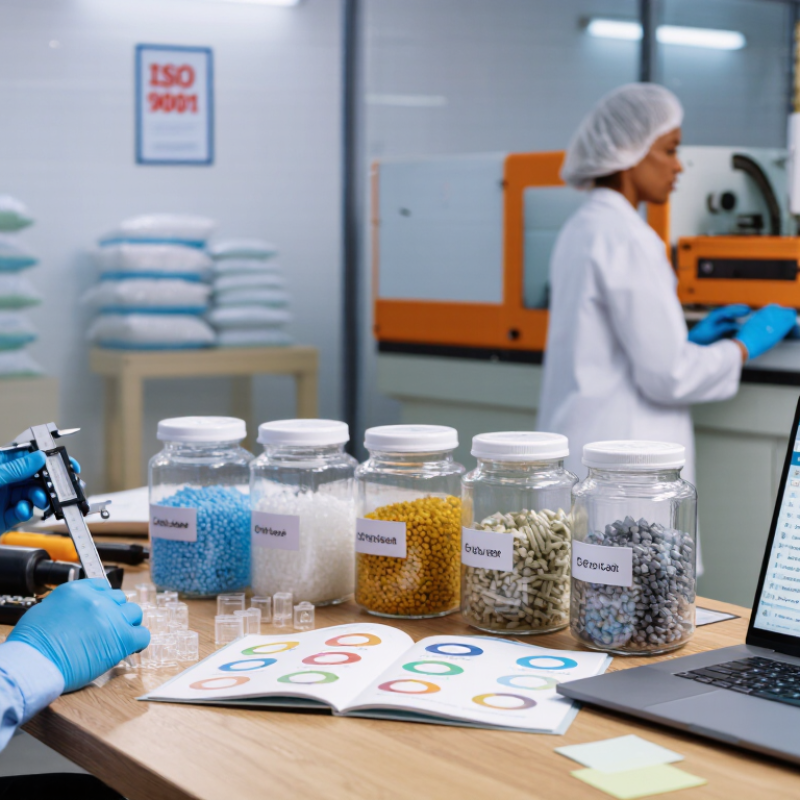
Define Your Plastic Supply Requirements and Quality Standards
Before searching for reliable plastic suppliers worldwide, define the material precisely. Record the polymer type, grade, color, additives, annual volume, packaging, and delivery range. Specify measurable limits for melt flow rate, density, moisture, tensile strength, and impact resistance. Vague requirements create expensive misunderstandings.
Industry data shows why control matters. PlasticsEurope reported global plastics production of about 414 million tonnes in 2023. The OECD Global Plastics Outlook found that only 9% of plastic waste was recycled in 2019. Your specification should therefore include recycled content, contamination limits, and batch traceability. Request certificates of analysis for every shipment. Verify testing through an ISO/IEC 17025-accredited laboratory when risk is high. ISO 9001 certification can indicate process discipline, but it does not guarantee material performance. I have seen well-presented documents hide weak sampling practices. A certificate is evidence, not certainty.
Tips: Build a one-page quality agreement before requesting quotations. Include approved test methods, tolerance limits, inspection frequency, and rejection procedures. Ask for three recent batch records, not one sample. Compare laboratory results with your own trial production. Keep retained samples in sealed bags, labeled with batch numbers and dates. Do not approve a supplier only because the price is attractive. Even experienced buyers sometimes overlook color drift after storage. Review that risk before signing.
Identify Potential Suppliers Through Global Sourcing Channels
Reliable plastic suppliers often appear through several global sourcing channels, not one search result. Trade directories can reveal manufacturers by resin type, molding process, and production region. Industry exhibitions provide a more practical view. You can inspect sample parts, ask about tooling, and observe how representatives answer technical questions. Local chambers of commerce and manufacturing associations may also provide verified supplier lists.
Online sourcing platforms save time, but profiles require careful checking. Request business registration details, material specifications, quality certificates, and recent production photos. A video tour can show storage conditions, drying equipment, and inspection areas. Do not rely on certificates alone. Confirm their issuing body and validity independently. Referrals from engineers, freight partners, or experienced buyers can expose suppliers with consistent delivery records. Still, personal recommendations are not proof.
Build a shortlist of three to five suppliers. Send the same drawing, tolerance table, resin requirement, annual volume, and packaging instructions to each company. Compare response quality, not only price. Ask for samples from normal production, not specially prepared pieces. Test dimensions, surface finish, strength, and odor where relevant. I once treated a fast quotation as a positive sign, but the supplier later avoided basic process questions. That was my mistake. A smaller factory may offer careful communication, yet its capacity could be limited during peak seasons. Check production schedules, backup equipment, export experience, and payment terms before placing a trial order. Keep every promise in writing.
Verify Supplier Credentials, Production Capacity, and Compliance
Finding reliable plastic suppliers worldwide starts with evidence, not polished websites. I learned this after a sample passed inspection, while a later shipment showed uneven wall thickness. Ask for legal registration, ownership details, manufacturing address, and verifiable trade references. Request current quality certificates, audit reports, and named technical contacts. A genuine supplier should answer specific questions without hiding behind sales language. Check whether certificates match the factory and product scope. Small inconsistencies matter.
Production capacity needs physical proof. Review machine lists, mold availability, shift patterns, and monthly output records. Ask how the factory handles peak orders, resin shortages, maintenance, and rejected parts. A supplier claiming huge capacity may still lack suitable tooling or trained operators. Request a controlled sample from normal production, not a hand-selected piece. Compare dimensions, color, weight, packaging, and defect rates against agreed specifications. I prefer staged orders with inspection before shipment. It costs more. It can expose weak controls early.
Compliance should cover materials, workers, environmental practices, and destination-market requirements. Confirm resin traceability, restricted-substance testing, waste handling, and documented quality procedures. For food-contact or medical applications, require relevant reports from competent laboratories and verify their dates. Do not accept copied PDFs as proof. Use an independent audit for important orders, and record corrective actions. A supplier may pass one audit and still drift later. Review performance quarterly, because trust needs evidence. I still leave room for doubt; no checklist replaces observation.
Compare Samples, Pricing, Lead Times, and Contract Terms
Reliable plastic sourcing starts with comparable evidence, not attractive quotations. Request identical sample specifications from each supplier: resin grade, recycled content, color tolerance, dimensions, weight, and test method. Record molding defects, warpage, odor, surface finish, and packaging condition. A sample can pass inspection while production fails later. That happened to me once.
Pricing needs a full-cost comparison. Separate resin, tooling, conversion, packaging, freight, duties, inspection, and payment charges. Ask how prices change when resin indexes move. PlasticsEurope’s Plastics—The Fast Facts 2024 reports global plastics production reached 413.8 million tonnes in 2023, showing the scale and volatility of the supply base. A low unit price may hide unstable material formulas or expensive minimum orders. Request price validity, volume tiers, surcharge triggers, and currency assumptions in writing.
Lead times should be measured from purchase order approval, not from the first conversation. Compare tooling time, sample approval, production days, quality release, and shipping separately. Require a capacity statement for peak months and evidence from recent, comparable orders. Contract terms deserve equal attention: agreed specifications, inspection rights, change-control procedures, late-delivery remedies, replacement rules, confidentiality, and dispute jurisdiction. The International Trade Centre’s SME Competitiveness Outlook emphasizes stronger supply-chain transparency and risk management for international sourcing. Still, paperwork cannot replace verification. Visit the facility when practical, audit batch records, and retain sealed samples. Perfect forecasts are impossible. Build a modest safety stock instead.
How to Find Reliable Plastic Suppliers Worldwide?
A practical supplier-screening benchmark comparing samples, pricing, lead times, and contract terms. Scores use a 0–100 evaluation scale, where 100 represents the strongest result.
Sample approval should confirm material consistency and production quality. Pricing should include tooling, packaging, freight, duties, and payment terms. Lead-time reliability should be checked against production schedules, while contracts should clearly define specifications, inspection rights, defect handling, delivery penalties, and intellectual-property protection. The scores are a neutral planning benchmark and should be replaced with verified RFQ and supplier-audit results.
Build a Reliable Partnership Through Ongoing Quality Management
How to Find Reliable Plastic Suppliers Worldwide?
Build a Reliable Partnership Through Ongoing Quality Management
A dependable supplier is not proven by a polished website or one attractive sample. In real sourcing work, consistency matters more. Ask for batch records, material specifications, inspection reports, and traceability details. Request samples from different production lots. Compare color, dimensions, strength, odor, and surface finish under the same conditions. Small differences can reveal unstable processes.
Quality management should continue after the contract is signed. Set clear acceptance criteria before production begins. Use a shared inspection plan for incoming materials, in-process checks, and final release. Review defect rates, delivery accuracy, corrective actions, and response times every month. A factory visit can add useful evidence: observe storage areas, calibration labels, operator training, and how rejected goods are separated. These details often tell more than sales promises.
No system is perfect. A supplier may pass an audit and still miss a tolerance later. A common mistake is treating a strong first shipment as enough evidence. That judgment can be too optimistic. Require root-cause analysis when failures appear, not just replacement goods. Track whether corrective actions actually work. Keep communication factual and recorded. Suppliers should confirm that materials and processes meet applicable safety, environmental, and trade requirements in the destination market. Trust grows when both sides share data, admit weak points, and improve the process repeatedly.