


Blog
7 Tips for Choosing the Right Plastic Material
Choosing the right plastic material is not a catalog exercise. It is a design decision that affects strength, weight, cost, processing, and service life. A brittle clip, a warped housing, or a container that clouds after cleaning can turn a small materials mistake into an expensive redesign. There is no universal winner.
The scale makes the choice important. The OECD’s Global Plastics Outlook reports that global plastics production reached 460 million tonnes in 2019. It also estimates that only 9% of plastic waste was ultimately recycled. These figures describe a broad industry challenge, not the footprint of any single product. Still, they underline why durability, material efficiency, and end-of-life planning belong in early design discussions. Numbers help. Context matters more.
Materials selection expert Michael F. Ashby writes, “The first step in materials selection is to translate the design requirements into constraints and objectives.” That is a useful starting point for choosing a plastic material. Define the load, temperature range, chemical exposure, appearance, production volume, and target cost before comparing resin grades. Then examine trade-offs using supplier data, test results, and relevant standards. A datasheet is not a promise of performance in every real-world condition. Test the finished part. Even careful teams can overlook a detail, such as a sharp corner that concentrates stress or a cleaning agent that dulls the surface. This guide’s seven tips will help structure the decision, while leaving room to question assumptions when test evidence disagrees.

Define the Part’s Function and Operating Conditions
Start with the part’s job and its actual surroundings. Will it carry a steady load, flex repeatedly, seal against liquid, or survive a drop? Loads matter. Note the force, direction, duration, and acceptable deflection. A thin snap-fit clip and a thick machine guard may use plastic, but their failure risks differ.
Then write down the operating conditions: minimum and maximum temperatures, chemical contact, moisture, sunlight, and cleaning methods. PlasticsEurope’s Plastics – the Fast Facts 2024 report estimates global plastics production at 413.8 million tonnes in 2023. That scale reflects a wide range of materials, not interchangeable grades. Compare actual grade data using relevant test methods, such as ISO 527 for tensile properties, and check the datasheet’s test temperature and conditioning. Easy to miss. A quoted strength may not represent a hot, wet, or molded part.
Include how the part will be made and used: wall thickness, molding direction, cycle count, and expected service life. A material that works in a brief bench test may creep under constant load or crack after repeated chemical exposure. I would not trust a resin family name alone; grade, additives, and processing history matter. Test representative parts under realistic conditions, then revisit any assumption that rests only on a catalog value.
7 Tips for Choosing the Right Plastic Material — Define the Part’s Function and Operating Conditions
Operating temperature is one key selection factor. Compare it with the part’s expected temperature, then also evaluate mechanical loads, chemical exposure, moisture, impact, and required service life. Values below are approximate, representative continuous-use temperatures; actual limits vary by grade and conditions.
These figures are screening estimates, not design limits. Check the specific material grade’s technical datasheet and validate it under the part’s real operating conditions.
Match Strength, Flexibility, and Temperature Requirements
A plastic part should be selected for the forces and temperatures it will actually face, not just its shape or price. A thin clip that bends repeatedly needs flexibility and fatigue resistance; a loaded bracket needs stiffness and strength. Check whether the part will be pulled, compressed, or struck, and whether those loads continue over time. Small details matter.
Grade-level property data show why comparisons need care. UL Prospector and the CAMPUS materials database list typical tensile strengths near 55–75 MPa for many polycarbonate grades, while unfilled PEEK grades commonly approach 90–100 MPa. These figures are not guarantees: reinforcement, processing, and test conditions change results. A stronger resin may also be harder to flex or more costly than the design needs.
Temperature can change the answer. PEEK is commonly rated for continuous service near 250°C, while many polycarbonate grades have heat-deflection temperatures around 120–140°C under specified test loads. These measures are not interchangeable. Check the datasheet’s test method, then consider real conditions: a sun-heated enclosure, hot cleaning cycles, or a fastener under constant stress. I would still test a prototype at the highest expected temperature; a neat datasheet match can miss a weak joint or sudden loss of stiffness.
Check Chemical Resistance and Environmental Exposure
Chemical resistance depends on more than the name of a liquid. Check its concentration, temperature, and contact time against the plastic’s compatibility data. A part exposed to diluted cleaner at room temperature may behave differently when the solution is concentrated or warm. Conditions matter.
Also consider what surrounds the part. Sunlight can weaken some plastics, while moisture, salt spray, or repeated temperature changes may affect others. A storage bin near a sunny window faces a different environment from a sealed component indoors. Small details matter. Mechanical stress can make chemical damage more likely, especially around sharp corners, screw holes, and tight bends.
Compatibility charts are useful starting points, not guarantees. They may not reflect your exact mixture, manufacturing process, or operating conditions. If failure would cause costly downtime, test a sample under realistic exposure before choosing a material. Record changes in color, swelling, cracking, or brittleness over time. I have seen small test pieces reveal problems that a quick table check missed. Still, a short trial cannot reproduce every condition; review the evidence carefully before committing to a design.
7 Tips for Choosing the Right Plastic Material - Check Chemical Resistance and Environmental Exposure
| Tip | What to Check | Useful Material Guidance | Environmental Exposure to Consider |
|---|---|---|---|
| 1. Identify every chemical the part will contact | List the chemicals, mixtures, cleaning agents, and likely contaminants—not just the primary fluid. | Polypropylene and polyethylene often resist many aqueous acids and alkalis, but resistance varies by chemical and service conditions. PTFE has broad chemical resistance. | Include occasional spills, wash-down chemicals, vapors, and contact during storage or maintenance. |
| 2. Check concentration and temperature together | Confirm the chemical concentration and the highest continuous and short-term temperatures. | A plastic that performs well at room temperature may soften, swell, or lose strength at elevated temperatures or higher concentrations. Consult chemical-resistance data for the exact conditions. | Account for heat from sunlight, nearby equipment, hot fluids, and cleaning cycles. |
| 3. Evaluate solvents and stress cracking | Check whether solvents can cause swelling, softening, crazing, or environmental stress cracking under load. | ABS can be attacked by some ketones and esters; polycarbonate is vulnerable to some solvents and alkaline cleaners. Compatibility depends on formulation, stress, and exposure time. | Test parts with molded-in stress, press fits, threaded joints, or sustained mechanical loading in the actual fluid. |
| 4. Assess outdoor UV and weather exposure | Determine whether the part will face direct sunlight, rain, temperature cycling, or long outdoor service. | Unstabilized polyethylene and polypropylene can degrade with prolonged UV exposure. UV-stabilized grades or protective coatings may improve outdoor durability; polycarbonate may yellow or lose impact performance without suitable protection. | Consider local UV intensity, orientation, shade, surface color, and the intended service life. |
| 5. Account for moisture and dimensional change | Check water absorption, swelling, dimensional tolerances, and changes to mechanical properties. | Nylon absorbs more moisture than many common plastics, which can affect dimensions and stiffness. Polyethylene and polypropylene generally absorb little water. | Consider humidity, immersion, repeated wet-dry cycles, and whether the part must maintain a close fit. |
| 6. Check permeation and barrier needs | Verify whether gases, vapors, or liquids can permeate through the wall, even when there is no visible damage. | Chemical resistance alone does not guarantee a suitable barrier. Some hydrocarbons can permeate or swell polyethylene; barrier performance depends on the specific polymer grade, wall thickness, and fluid. | Pay particular attention to fuel storage, emissions limits, odor control, and pressure-retaining applications. |
| 7. Validate the exact grade and finished part | Review supplier data and test representative parts under realistic exposure, load, temperature, and cleaning conditions. | Additives, fillers, colorants, processing, welds, and residual stress can affect performance. Use compatibility charts as a screening tool, not a substitute for application-specific testing. | Include expected service duration, exposure frequency, mechanical stress, and relevant safety or regulatory requirements. |
Note: Chemical compatibility depends on the exact polymer grade, chemical mixture, concentration, temperature, exposure time, and applied stress. Verify suitability with current technical data and application-specific testing.
Compare Processing Needs, Availability, and Total Cost
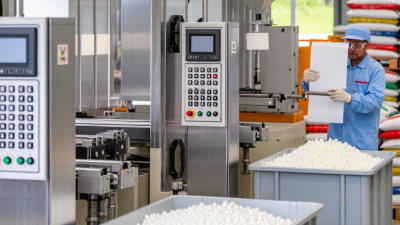
Choosing a plastic material means checking how it behaves in your actual process, not just comparing a data sheet. A resin may meet strength requirements but need careful drying before molding. That adds time, equipment use, and another chance for defects. For a small production run, a material that processes easily may be more practical than one with slightly better performance. Ask for processing ranges, sample parts, and realistic cycle-time estimates. Then test the material using your own equipment and part geometry. A tidy lab result is not the whole story.
Availability can change the calculation. Check whether the required grade is stocked locally, what order quantities apply, and how long replenishment usually takes. A lower price matters less if production stops while material is in transit. Small details matter. Include tooling changes, scrap, packaging, freight, and storage in your cost comparison—not only the price per kilogram. Request quotes for the same volume and specification, then compare them side by side. Estimates are imperfect; I would treat early figures as provisional, especially before trials reveal scrap rates or processing adjustments. Keep a modest allowance for those unknowns, and review it after the first production run.
Test Shortlisted Materials for Safety and Long-Term Performance
A shortlist is only a hypothesis. Test molded samples, not just resin data sheets, because colorants, wall thickness, and processing can change results. Compare tensile strength before and after exposure using ASTM D638. For fire screening, UL 94’s V-0 classification limits each afterflame period to 10 seconds and the total for five specimens to 50 seconds. It also rejects flaming drips that ignite cotton. This is useful evidence, not proof of safety in every product or setting.
Then age it. Expose samples to the actual cleaning fluid, heat, moisture, and sunlight they will encounter. ASTM D543 covers chemical resistance testing; ISO 4892-2 describes xenon-arc weathering. Record mass, color, dimensions, and strength at set intervals. A tensile result that falls sharply after exposure deserves attention, even if the untouched sample looked excellent. Keep untreated controls beside the aged pieces. Small differences matter. One limitation: accelerated tests cannot perfectly reproduce years of real use. A field review rarely matches a neat lab curve. For food-contact or medical uses, add application-specific biological and migration testing, and document the test conditions with each result.
Related Posts
-
2026 Best Plastic Material for Global Buyers?
-

Why Choose Plastic Raw Material for Global Sourcing?
-

How to Choose the Right Plastic Compound for Your Project?
-
2025 How to Choose the Best Plastic Material for Your Projects: A Comprehensive Guide
-

Why the Demand for Plastic Compounds is Surging in the Manufacturing Industry
-
Top Plastic Filler Compound Suppliers for Global Buyers