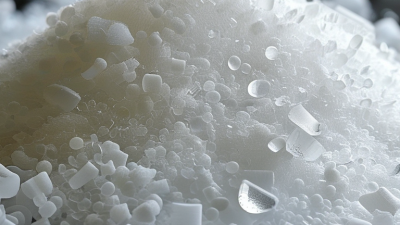
China Top PP Plastic Manufacturers and Suppliers
China is a major source of polypropylene products, from injection-molded household parts to woven packaging and automotive components. Yet choosing a supplier involves more than comparing prices or browsing a polished product catalogue. Buyers need to understand the grade, intended process, and consistency behind each offer. Small details matter: a resin’s melt flow rate can affect filling, cycle time, and the finish of a molded part.
Polymer scientist Dr. Ramani Narayan has stated, “Biobased does not mean biodegradable, and biodegradable does not mean biobased.” The distinction is a useful reminder to check technical claims carefully, including claims about material composition and environmental properties. For pp plastic sourcing, request current datasheets, clarify whether material is virgin or recycled, and compare samples under your actual production conditions. Ask how the supplier controls batch variation and supports traceability. A brochure cannot answer everything.
This guide introduces leading China-based manufacturers and suppliers, with attention to product range, production capabilities, quality documentation, and communication. Those are starting points, not guarantees. Supplier details can change, and a strong website does not prove consistent delivery. Verify specifications, request recent test records, and discuss packaging, lead times, and after-sales support directly. One point deserves honest reflection: even careful checks cannot remove every sourcing risk. The aim is to make comparisons clearer, ask better questions, and identify suppliers whose capabilities match the application—not merely the lowest quotation.
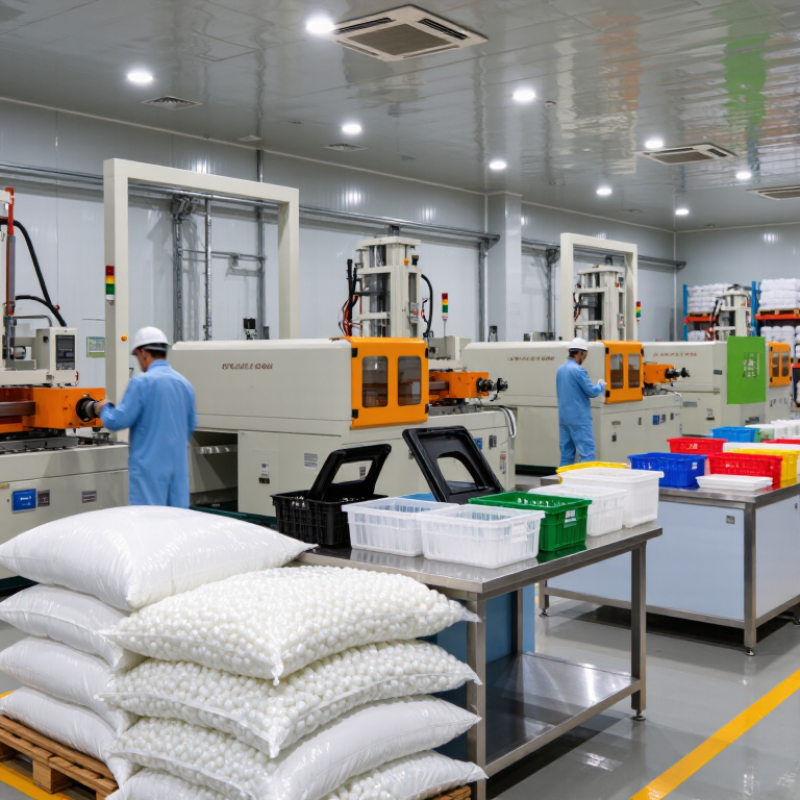
Overview of China’s PP Plastic Manufacturing Industry
China’s polypropylene (PP) manufacturing industry has grown alongside demand for packaging, household goods, and automotive components. S&P Global Commodity Insights’ 2024 market assessment estimated China’s PP nameplate capacity at about 40 million tonnes per year in 2023. Capacity is not actual output. Plant utilization and margins vary with feedstock prices and demand.
The National Bureau of Statistics reported 74.885 million tonnes of plastic products output in 2023. This figure covers many plastics, not PP alone, but it shows the scale of downstream processing. Across industrial parks, PP resin is converted into pellets, then molded into crates, appliance housings, and woven sacks. Production lines need steady feedstock, temperature control, and consistent quality checks.
China Customs data also helps explain the supply picture: imports and exports move as domestic capacity and demand shift. Buyers should assess grade specifications, batch consistency, and delivery capacity, not just quoted price. A high installed capacity can sound reassuring. It may still hide uneven utilization or regional supply gaps. That distinction deserves more attention.
Common PP Plastic Products and Their Applications
Polypropylene (PP) is used in many everyday products because it is lightweight, durable, and easy to mold. You can find it in food storage tubs, reusable household containers, bottle caps, and hinged lids. That small hinge matters. PP often bends repeatedly without snapping, though performance depends on the product’s design and material grade.
Fibers made from PP are common in woven sacks, reusable shopping bags, carpets, and nonwoven fabrics. Their low weight helps reduce carrying effort, while woven structures can hold grains, soil, or other dry goods. In vehicles, molded PP parts may appear in interior trim, door panels, and storage compartments. These parts can be shaped around clips and curves, but a poor fit is still a poor fit.
For a product exposed to heat, impact, or outdoor conditions, buyers should check the specified grade and test data rather than assume all PP behaves alike. Some grades handle repeated use better; others prioritize stiffness or easier processing. Temperature limits also vary, so a container suitable for warm food may not suit every heating method. Details matter. It is easy to focus on price and forget the lid, wall thickness, or intended cleaning routine. Those small choices affect service life.
China Top PP Plastic Manufacturers and Suppliers: Common PP Products and Applications
Polypropylene (PP) is widely used for packaging, household goods, automotive components, fibers, and pipes. The chart shows typical temperature benchmarks for PP; actual performance depends on the grade, product design, and operating conditions.
Common products and applications: food containers and caps for packaging; storage bins and housewares for everyday use; automotive trim and battery cases; woven sacks and carpet fibers; and pipes and fittings. Typical PP continuous-use temperatures are around 100°C, while melting commonly occurs around 160–170°C. These are approximate material benchmarks, not product ratings.
Leading PP Plastic Manufacturers and Suppliers in China
China’s polypropylene supply base includes resin producers, compounders, and finished-part manufacturers. PlasticsEurope reported that China accounted for 32% of global plastics production in 2022. That scale offers buyers many sourcing options, but it does not guarantee consistent PP quality. A useful supplier review starts with grade-specific data: melt flow rate, density, additive content, and batch-to-batch variation. Ask for recent test reports and compare them with your own sample results.
The OECD’s Global Plastics Outlook reported that worldwide plastic production reached 460 million tonnes in 2019, twice the 2000 level. This broad market growth helps explain the importance of dependable supply planning. For PP buyers, practical checks include pellet appearance, packaging integrity, delivery lead times, and whether production records match the quoted specification. Request a certificate of analysis for each lot. Then test material on the equipment and under the conditions used in your application.
A factory visit can reveal details a brochure cannot: moisture controls, calibrated testing equipment, and how staff isolate nonconforming batches. Still, a polished audit should not replace repeated performance checks. Supplier documentation may look complete while shipment consistency remains uneven. That gap deserves attention. Compare trial orders over time, clarify change-notification procedures, and confirm who handles technical questions after delivery.
Manufacturing Standards and Quality Considerations
For buyers comparing China-based polypropylene suppliers, quality begins with a repeatable process, not a polished sample. Plastics Europe reported global plastics production of 400.3 million tonnes in 2022, with polypropylene accounting for roughly one-sixth. That scale makes consistent resin control essential. Ask suppliers how they monitor melt flow, ash content, color, and moisture across production lots.
ISO 1133 defines methods for measuring melt mass-flow rate, a practical indicator of how PP behaves during processing. Results should identify test conditions; values measured under different temperatures or loads are not directly comparable. Request a recent certificate of analysis and check whether its lot number matches the shipment. Small details matter. ISO 9001 can support documented quality management, but certification alone does not prove that a particular batch meets your specification.
For molded parts, assess impact strength, tensile performance, dimensions, and visible defects under conditions that reflect actual use. Ask for test methods, sampling frequency, and records showing how out-of-spec material is handled. A supplier may report an acceptable average while hiding wide lot-to-lot variation. That is worth questioning. Standards help create a common language, yet buyers still need clear acceptance limits and occasional independent verification. One limitation: published industry figures describe broad markets, not any individual factory’s performance.
How to Evaluate and Select a Chinese PP Supplier
Choosing a Chinese PP supplier requires more than comparing quoted prices.
Plastics Europe’s Plastics the Fast Facts 2023 reports 400.3 million tonnes of global plastics production in 2022, with polypropylene representing about 16.8%. That scale makes consistent quality and traceable batches essential. Ask for a current technical data sheet and batch-specific certificate of analysis. Check melt mass-flow rate against your processing range, not just the supplier’s headline grade. Request test methods, tolerances, and recent results for impact strength, tensile properties, and ash content where relevant. Small differences matter. A sample that runs smoothly on a supplier’s machine may behave differently in your own mould or extrusion line.
Evaluate the production site as carefully as its documents.
Ask how raw materials, colour changes, and regrind are controlled, and whether each batch can be traced to a production date. Arrange a trial using your actual equipment and record cycle time, scrap, and part appearance. Verify stated certifications directly with the issuing body, and review quality records during an audit or live video inspection. Discuss packaging, moisture protection, lead times, and how defects are handled in writing. A low price can hide costly variation. No checklist removes all doubt; I would treat one successful sample as a starting point, not proof of long-term consistency. Compare several production lots before committing to regular orders.