





Blog

Top Plastic to Plastic Recycling Suppliers Worldwide
Plastic recycling is moving from a local waste issue to a global supply challenge. Manufacturers now seek suppliers that can convert used plastic into dependable secondary materials. This article examines top plastic-to-plastic recycling suppliers worldwide, focusing on practical performance rather than impressive claims.
Reliable suppliers usually show clear feedstock records, sorting methods, washing systems, and pellet quality data. Their facilities may include optical sorters, hot washers, extrusion lines, and laboratory testing equipment. These details matter when recycled resin enters packaging, automotive parts, construction products, or consumer goods. Some companies promote closed-loop recycling, while others combine mechanical processing with carefully controlled advanced technologies. The phrase plastic ke plastic is sometimes used informally to describe this material-to-material journey, although its meaning may require clarification in professional discussions.
Supplier selection should involve more than production capacity. Buyers need to compare contamination limits, color consistency, minimum order quantities, delivery reliability, and technical support. Independent certifications can strengthen confidence, but certificates alone cannot replace factory visits or sample testing. Real performance may change with seasonal feedstock and regional collection systems. That weakness deserves attention. No supplier is perfect.
The following overview considers experience, processing expertise, traceability, environmental reporting, and customer suitability. It also recognizes that “top” depends on the buyer’s application and location. A supplier serving food-grade applications may not fit a construction project. Careful evaluation remains essential, especially when recycled content must perform consistently over time.
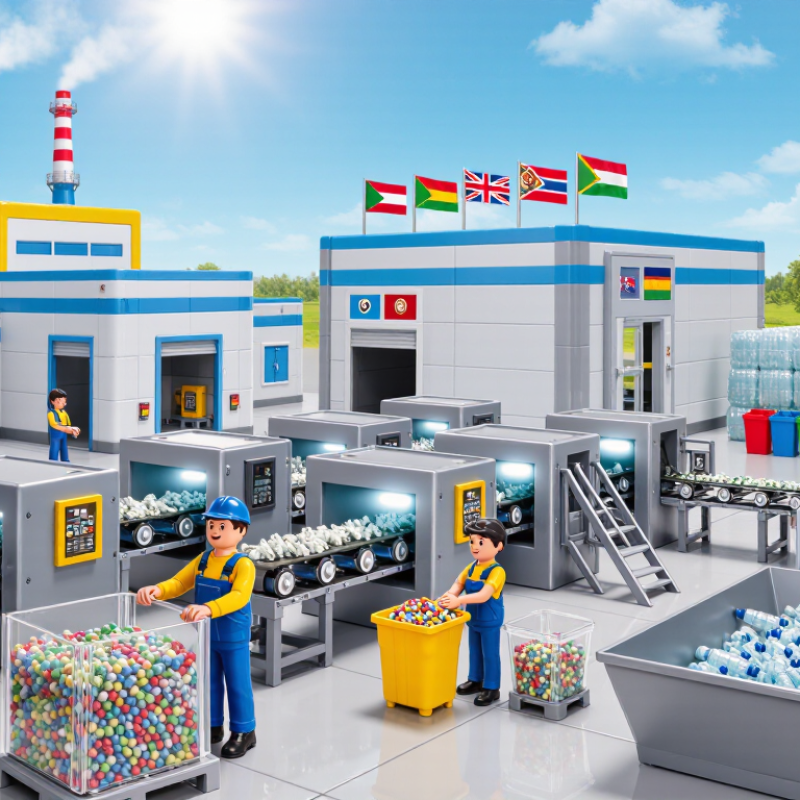
Plastic-to-Plastic Recycling: Definition, Scope, and Industry Role
Plastic-to-plastic recycling turns used polymers into feedstock for new plastic products. It includes collection, sorting, washing, shredding, extrusion, filtration, and quality testing. Mechanical recycling suits clean, compatible streams. Chemical recycling may break polymers into basic components. Each route has different energy use, costs, and output limits. Its industry role is practical: it reduces virgin resin demand, diverts material from disposal, and supports measurable circular production. Yet recycling is not automatic. Dark pigments, multilayer films, labels, and mixed resins can reduce yield. Reliable suppliers should disclose input specifications, process controls, test data, and traceability records.
Tips: Ask for polymer type, recycled content, moisture results, melt-flow data, and contamination limits. Request a recent sample. Compare it with production batches. Check how the supplier manages seasonal variation. Collection quality often changes. A site visit may reveal storage problems hidden by attractive documents. Small details matter.
A responsible worldwide sourcing assessment should examine capacity, worker safety, wastewater handling, and transport distance. Independent audits and laboratory reports improve confidence, but neither guarantees perfect performance. Industry experience shows that projects can fail when buyers trust pricing without testing compatibility. That mistake is easy to repeat. Recycled material may vary between batches. Buyers need realistic specifications, technical trials, and transparent records. Some performance claims remain difficult to verify, especially when supply chains cross several regions.
Top Plastic to Plastic Recycling Suppliers Worldwide - Plastic-to-Plastic Recycling: Definition, Scope, and Industry Role
A supplier-neutral overview of the principal plastic streams, recycling routes, output forms, quality requirements, and worldwide industry applications.
| Plastic Stream | Resin Identification | Typical Recycled Feedstock | Primary Plastic-to-Plastic Route | Common Recycled Output | Typical End-Use Applications | Key Supplier Qualification Criteria |
|---|---|---|---|---|---|---|
| Polyethylene Terephthalate (PET) | 1PET | Post-consumer beverage bottles, food containers, thermoforms, and polyester textile waste. | Sorting, hot washing, grinding, melt filtration, extrusion, and pelletizing. Depolymerization may also be used for selected polyester waste. | Washed flakes, recycled PET pellets, food-contact-grade recycled PET, and recycled polyester feedstock. | Bottles, trays, sheets, strapping, fibers, and textile products. | Color separation, IV-value control, moisture management, contaminant removal, traceability, and compliance with applicable food-contact rules. |
| High-Density Polyethylene (HDPE) | 2HDPE | Household bottles, detergent containers, crates, drums, pipes, and rigid packaging. | Mechanical sorting, granulation, washing, drying, melt filtration, extrusion, and pelletizing. | Natural or colored HDPE flakes and recycled HDPE pellets. | Non-food bottles, bins, pallets, crates, drainage products, pipes, and construction articles. | Polymer identification, separation of natural and colored material, odor reduction, melt-flow consistency, and control of metals and non-polyolefin content. |
| Polyvinyl Chloride (PVC) | 3PVC | Pipes, profiles, flooring, cables, window products, and selected packaging. | Dedicated collection, sorting, shredding, contaminant removal, and controlled mechanical reprocessing. Additive management is essential. | Recycled PVC flakes, powder, regrind, and compounded pellets. | Pipes, profiles, flooring layers, cable products, mats, and selected building materials. | Chlorine-containing material control, separation from other polymers, legacy additive screening, particle-size consistency, and application-specific testing. |
| Low-Density Polyethylene (LDPE) | 4LDPE | Stretch film, shrink film, shopping bags, agricultural film, liners, and flexible packaging. | Film sorting, pre-cleaning, shredding, washing when required, densification, melt filtration, and extrusion. | Recycled LDPE pellets, film-grade compounds, and densified regrind. | Garbage bags, liners, secondary packaging film, construction film, and molded non-food products. | Moisture and dirt removal, film-bale quality, gel reduction, melt filtration, odor control, and consistent melt-flow properties. |
| Polypropylene (PP) | 5PP | Caps, food tubs, household containers, automotive components, crates, and woven sacks. | Mechanical sorting by polymer and color, shredding, washing, extrusion, filtration, and pelletizing. Chemical recycling is also being developed for selected PP streams. | Recycled PP flakes, homopolymer or copolymer pellets, and impact-modified compounds. | Automotive parts, storage products, crates, pallets, household goods, packaging, and industrial components. | Polymer purity, melt-flow range, impact performance, odor and volatile control, color sorting, and filler-content verification. |
| Polystyrene (PS) | 6PS | Rigid food containers, cups, protective packaging, appliance packaging, and insulation products. | Mechanical recycling for clean rigid streams; dissolution or depolymerization routes may be used where feedstock quality and economics support them. | Recycled PS pellets, regrind, dissolved-polymer feedstock, and recovered styrene intermediates. | Rigid packaging, office products, insulation products, display articles, and non-food molded components. | Separation from expanded materials, food residue removal, flame-retardant screening, color control, and residual-monomer management. |
| Multilayer and Mixed Plastics | 7Other | Flexible laminates, films, pouches, mixed rigid packaging, and post-consumer products containing multiple polymers. | Advanced sorting, compatibilization, dissolution, pyrolysis, gasification, or depolymerization, depending on composition and target output. | Recycled compounds, hydrocarbon feedstock, monomer feedstock, or polymer-grade intermediates. | New packaging materials, chemical intermediates, molded products, and industrial polymers where regulations permit. | Feedstock characterization, chlorine and additive control, mass-balance accounting where applicable, contaminant limits, process yield, and independent verification of output quality. |
| Mechanical Recycling | Applicable to compatible thermoplastics | Relatively clean and well-sorted post-industrial or post-consumer plastic waste. | Sorting, size reduction, washing, drying, melt filtration, compounding, and pelletizing without intentionally changing the polymer's basic chemical structure. | Flakes, regrind, pellets, compounds, sheets, or molded products. | Packaging, automotive parts, construction products, household goods, textiles, and industrial components. | Stable feedstock supply, high polymer purity, reliable sorting, contamination control, consistent melt flow, and documented batch testing. |
| Chemical Recycling | Selected polymer streams | Plastic waste that is difficult to recycle mechanically, including certain mixed, colored, or contaminated streams. | Depolymerization, dissolution, pyrolysis, or gasification to produce monomers, polymer intermediates, or hydrocarbon feedstock. | Monomers, purified polymer intermediates, or recycled hydrocarbon feedstock suitable for producing new plastics after further processing. | New polymers, packaging materials, fibers, specialty chemicals, and industrial feedstocks. | Feedstock composition, process yield, energy demand, emissions profile, residue management, chain-of-custody documentation, and regulatory acceptance. |
Note: Resin identification codes describe the predominant polymer type and do not by themselves guarantee recyclability. Actual acceptance, recycled-content eligibility, and end-use suitability depend on local collection systems, contamination limits, product design, processing technology, and applicable regulations.
Related Posts
-

10 Best International Plastic Suppliers for Global Buyers
-
How to Find Reliable Plastic Suppliers Worldwide?
-
2026 Top Compound PP Types for Global Buyers?
-

What Are the Benefits of ABS Compound for Global Buyers?
-
China Best Color Masterbatch Manufacturer or Supplier?
-

How to Choose the Right PP Masterbatch?
